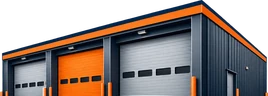
The short answer
An electric industrial door up to about 4 × 4.5 m typically costs £2,395 to £8,495 supplied and installed, ex VAT, depending on type. High-speed doors run from £7,495 to £34,995 and large-span doors start around £39,995. Size, insulation, wind load, motor and controls, safety equipment, access, strip-out and out-of-hours working are what move the final figure.
Key points
- Most electric industrial doors cost £2,395 to £8,495 supplied and installed, ex VAT, before specialist options.
- Compare quotes on scope: strip-out, electrics, safety devices, access and handover documents.
- Size, insulation and wind load drive the door price; control method drives the safety kit.
- Out-of-hours working and difficult access add labour but can save operating time.
- All figures are guides, ex VAT, and your fixed price is confirmed in writing after survey.
How much does a new industrial door cost?
A new electric industrial door costs between £2,395 and £8,495 supplied and installed, ex VAT, for most openings up to about 4 m wide and 4 to 4.5 m high. Specialist doors cost more. The table gives our guide ranges; every figure is ex VAT and your fixed price is confirmed in writing after survey.
| Door type | Guide price, supplied and installed, ex VAT |
|---|---|
| Industrial roller shutter, single-skin steel, electric (to c. 4 × 4 m) | £2,395 – £5,495 |
| Insulated roller door, electric (to c. 4 × 4 m) | £3,195 – £7,495 |
| Sectional overhead door, 40 mm insulated, electric (to c. 4 × 4.5 m) | £3,495 – £8,495 |
| High-speed fabric door | £7,495 – £15,995 |
| High-speed spiral (rigid slat) door | £17,995 – £34,995 |
| Fire shutter, single, with control panel and fail-safe closing | £4,495 – £11,995 |
| Sliding or folding industrial doors | £5,995 – £24,995 |
| Cold store or freezer door (sliding) | £6,495 – £17,995 |
| Hangar and large-span doors | On survey, typically from £39,995 |
| Steel personnel door, single | £845 – £1,795 |
| Steel fire exit door with panic hardware | £1,095 – £2,395 |
| Impact traffic doors, pair | £895 – £2,495 |
| PVC strip curtain, per doorway | £175 – £895 |
Why do quotes for the same size door vary so much?
Quotes for the same opening differ mainly because they describe different scopes of work, not because one installer is cheap and another expensive. One quote may cover a door delivered and fixed; another covers a finished, tested, documented powered machine ready to hand over.
When you line quotes up, check whether each one includes:
- removal and disposal of the old door, and making good the opening;
- the motor, control panel and any remote, loop or radar controls;
- safety devices such as safety edges, photocells or light curtains;
- the electrical connection to a local isolator, or only a door-side termination;
- access equipment such as a mobile elevating work platform;
- commissioning, force testing where relevant, and handover documents.
HSE guidance says an installer who assembles a powered door from components usually becomes its manufacturer, with duties to assess, test and document it before hand-over. A quote that leaves that out is not comparing like with like.
How do size, insulation and wind load change the price?
Size is the biggest single driver: a wider or taller door needs heavier panels or laths, a larger barrel or springs, a stronger motor and often wind reinforcement. Prices at the top of each range in the table generally reflect larger openings, higher specification, or both. Openings beyond the sizes shown are priced individually after survey.
- Insulation: moving from a single-skin shutter to an insulated roller door or a 40 mm sectional door adds material and sealing, but usually pays back in a heated building. Thicker panels and thermally broken designs cost more again.
- Wind load: exposed coastal or open sites, and very wide doors, may need a higher declared wind resistance class. That can mean wind bars, heavier guides or reinforced panels.
- Finish and glazing: colour-matched finishes, vision panels and wicket pass doors add to the door price and, in the case of glazing, can affect thermal performance.
How much do motors, controls and safety equipment add?
Motors and controls are included in our electric door guide prices; what changes the figure is how the door is controlled and how much safety equipment that control method demands. A door operated by a hold-to-run button needs less automatic protection than one that closes on a timer or opens from a radar or induction loop.
| Item | Guide price, ex VAT |
|---|---|
| Manual-to-electric conversion | £1,195 – £3,195 |
| Motor replacement | £845 – £2,395 |
| Safety upgrade (edges, photocells, light curtain) | £445 – £1,795 per door |
| Door protection (guide-rail guards, buffers) | £345 – £1,495 per door |
| Bollard, installed | £125 – £445 each |
| Strip-out and disposal on replacement | £345 – £1,195 per door |
Interlocks with dock levellers or other doors, traffic lights, access control and links to the fire alarm are specified on survey because they depend on how your site works. See door automation and controls and door safety upgrades for what is involved.
Motor choice also matters. A shaft-mounted direct drive suits most roller shutters and sectional doors; a centre-mounted or chain-driven operator may be needed where side room is tight. Three-phase motors handle large, heavy or frequently used doors better than single-phase, but need a suitable supply, which can add electrical work if the building does not already have one near the opening.
Which site conditions affect the installation price?
Site conditions move the price because they change how long the job takes and what equipment it needs. The common ones are:
- Access: high openings, restricted yards, soft ground for platforms, or work over live traffic routes.
- Out-of-hours working: night or weekend installation to keep a site running costs more in labour, but can be cheaper overall than lost operating time.
- Strip-out: removing and disposing of an old door, from £345 to £1,195 per door as a guide.
- The opening itself: damaged or out-of-square openings may need steel subframes, packing or repairs to cladding and lintels.
- Older buildings: where materials could contain asbestos, an appropriate asbestos survey is needed before disturbing them.
- Location: we cover England, Wales, Scotland and Northern Ireland; remote areas and islands are by arrangement, which can affect travel and access costs.
What should a fixed-price quote include?
A fixed-price quote should describe the finished result clearly enough that there is nothing left to argue about later. Before you accept one, check that it states:
- the door type, size, insulation, finish and declared wind class;
- the motor, control method and every safety device to be fitted;
- what happens to the old door and who makes good the opening;
- the electrical scope and who provides the supply;
- working hours, access equipment and any traffic management;
- the handover pack: conformity documents, user instructions and test records;
- exclusions, stated plainly.
Prices for new and replacement doors are confirmed in writing after a free survey and before any work starts. You can request a survey online.
What will the door cost to look after?
Running costs are mainly servicing and occasional repairs. Planned maintenance is a guide £85 to £175 per door per visit, ex VAT, depending on door type and how many doors are covered. A fire shutter service with drop test is a guide £125 to £265 per shutter.
For breakdowns, a repair visit covering attendance and the first hour is a guide £145 to £195, and a typical repair including parts and labour is £245 to £1,495. Regular servicing does not eliminate repairs, but it catches worn springs, cables and safety devices before they fail in use, which is when repairs cost most. Planned maintenance contracts set the visit frequency around how hard each door works.
Frequently asked questions
Do your guide prices include VAT?
No. Every guide price is ex VAT. VAT is added at the prevailing rate on your quotation and invoice. Guide ranges cover supply and installation unless stated otherwise, and for new and replacement doors your fixed price is confirmed in writing after a free survey, so the number you approve is the number you pay unless you change the scope.
Is the survey really free?
Yes, for new installations and replacements. The surveyor measures the opening, checks headroom, side room, structure, power and access, and discusses how the door will be used. You receive a written fixed price afterwards. Repair and servicing visits are chargeable because they involve diagnosing and working on an existing door.
Why is a high-speed door so much more expensive than a roller shutter?
High-speed doors use specialist drives, inverter controls, high-cycle components and integrated safety systems such as light curtains, and spiral versions add rigid insulated slats on a guided track. They are built to open and close many times an hour for years. Whether the extra cost is justified depends on your cycle count and energy losses, which our high-speed doors guide explains how to estimate.
Can I save money by keeping my existing motor or guides?
Sometimes, if they are in good condition, compatible and suitable for the new door. Reusing parts can complicate the conformity documentation, because whoever puts the finished powered door into service is responsible for it as a whole. We assess reuse on survey and will say plainly if a part is worn, obsolete or unsuitable.
Sources
- Powered gates and doors: legal responsibilities (HSE)
- Ensuring powered doors and gates are safe (HSE)
- Approved Document L: Conservation of fuel and power (GOV.UK)
This guide is general information about UK rules and good practice, not legal advice. Check the official sources and your own risk assessment for your site.