What makes farm doors wear out?
Farm doors wear out mainly through corrosion, wind and impact. Livestock housing produces ammonia and moisture that attack untreated steel, fixings and motor housings, while slurry, silage effluent and fertiliser dust speed up rust along the bottom of the door. Exposed sites put heavy wind load on wide openings, and a door left part-open in a gale can be badly damaged.
Openings are also large and irregular. Combines, sprayers and telehandlers need wide, high clearances, and many older buildings have uneven floors and steel frames that are out of square. Security matters because machinery, fuel and chemicals are targets for theft. Grain stores bring their own risk: stored grain should never be held back by a door that is not designed for that load, and doors need to keep birds and vermin out.
Which doors suit livestock, grain and machinery buildings?
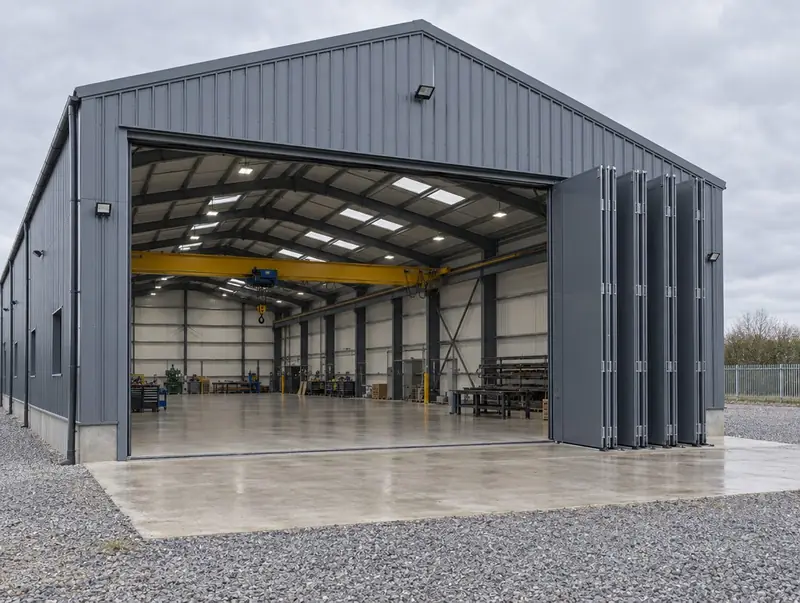
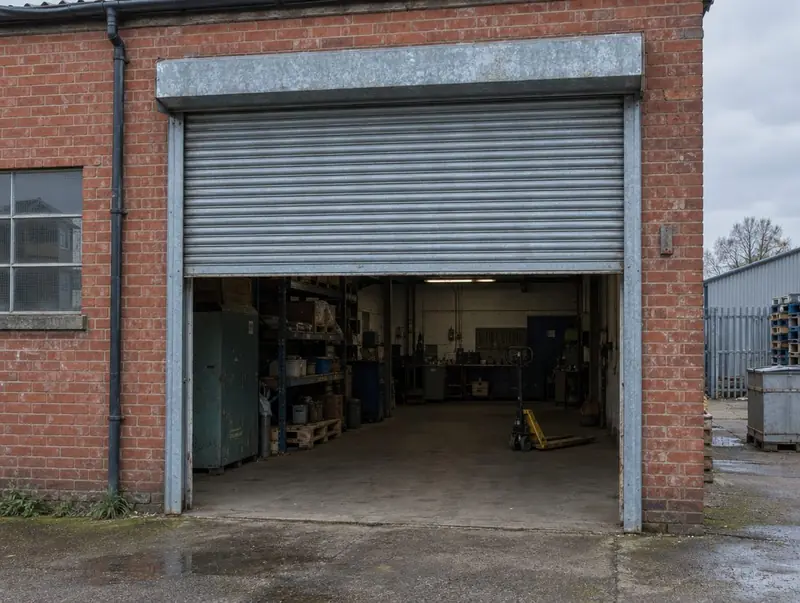
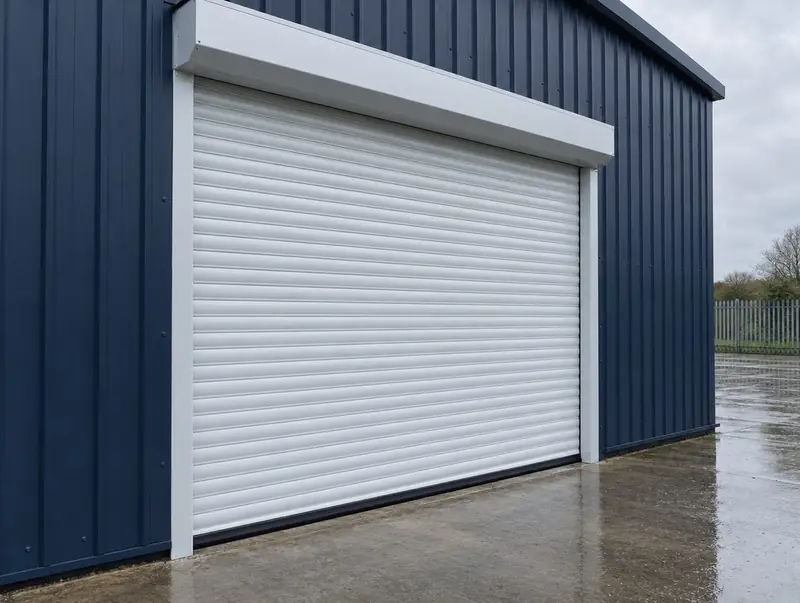
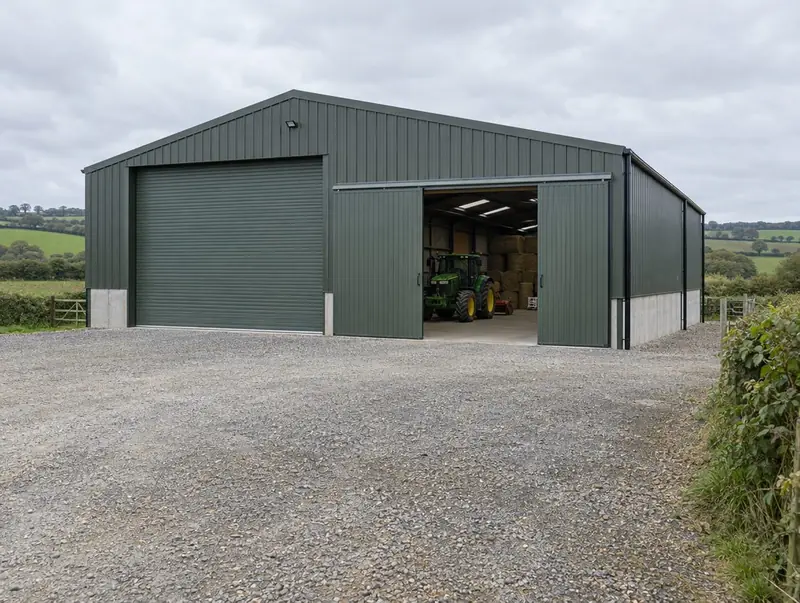
Sliding and folding doors suit the widest openings on machinery sheds and grain stores, because they open without needing headroom and can be operated by hand. Roller shutters suit openings within the span of a single curtain and give good security when closed.
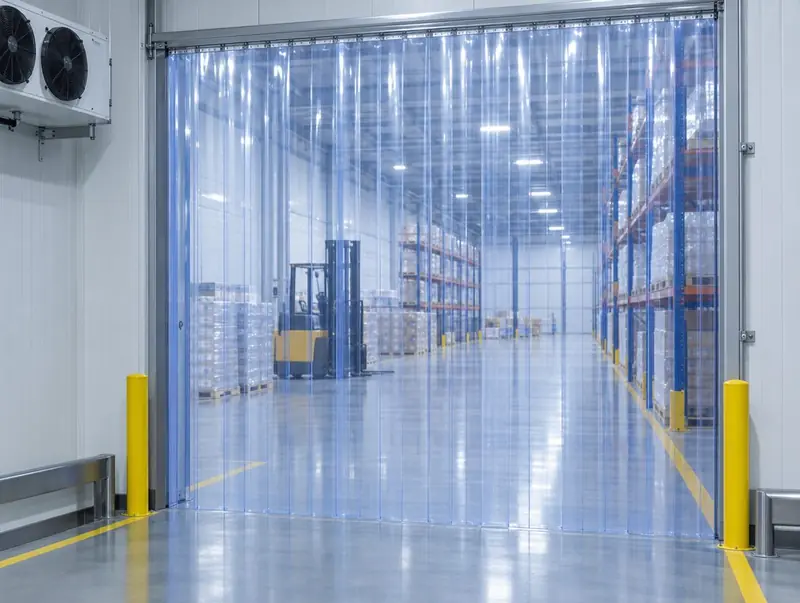
- Livestock housing: galvanised or coated steel, aluminium or plastic-faced doors with stainless fixings to resist ammonia, and strip curtains where airflow and access both matter.
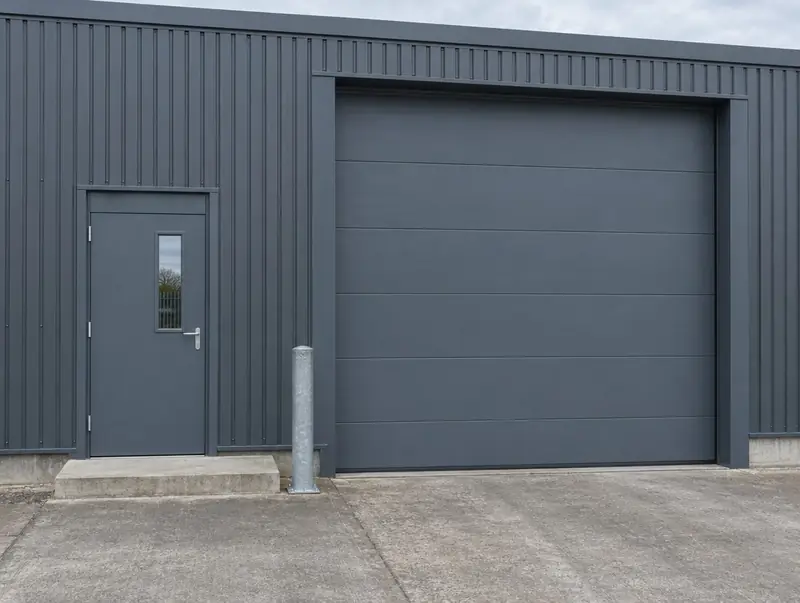
- Workshops and controlled stores: insulated roller doors or sectional doors.
- Daily access: steel personnel doors so the main door can stay shut.
Where only a single-phase supply is available, many doors can run on single-phase motors, and some three-phase motors can run through an inverter drive. Manual chain or hand operation remains an option on most door types.
What safety rules apply to farm doors?
Farm doors are covered by the same workplace safety law as any other workplace: doors must be maintained, sliding doors need a device to stop them leaving their track, and powered doors must prevent trapping and be operable manually where safety requires. These duties come from the Workplace Regulations 1992 in England, Wales and Scotland, enforced by HSE, and the 1993 Northern Ireland regulations, enforced by HSENI. Children and visitors on farms add to the trapping risk, so safety edges and photocells matter on automatic doors.
- Keep doors fully open or fully closed in high wind, and use wind locks or stops where the manufacturer provides them.
- Never use a door to retain grain or bulk materials unless it is designed for that load.
- Check sliding door tracks, rollers and top guides so a leaf cannot drop or derail.
Converting a manual door to power makes the converter the manufacturer under supply of machinery law, with a Declaration of Conformity to issue.
How do you plan door works around the farming year?
Farm door works are planned around the farming year, avoiding harvest, lambing or housing periods when buildings are full and access is limited. At survey we agree timing, access for our vehicles and any biosecurity rules for the farm.
- Fit grain store doors when stores are empty, ahead of harvest.
- Fit livestock building doors before animals are housed, or with stock moved clear.
- Follow your biosecurity measures, such as clean footwear, vehicle washing and restricted areas.
- Secure machinery sheds overnight if works run over more than one day.
Remote and island farms are covered by arrangement, and where we can we group visits in an area to keep travel costs down.
Survey checklist for farms
- Building use: livestock, grain, machinery or workshop
- Opening width and height for your largest machine
- Exposure to wind and the prevailing direction
- Power available: none, single-phase or three-phase
- Ammonia, slurry or fertiliser exposure at the door
- Security needs for machinery, fuel and chemicals
- Busy periods to avoid: harvest, lambing, housing
Questions from farms
Can we have an electric door with only single-phase power?
Usually, yes. Many roller shutters, sectional doors and some sliding doors are available with single-phase motors, and some three-phase motors can run from a single-phase supply through an inverter drive. The door's motor dictates the supply it needs, so we confirm it at survey. A manual chain or hand-operated door is another option where power is limited.
Which doors resist ammonia in livestock buildings?
Doors with galvanised and coated steel, aluminium or plastic-faced panels, stainless steel fixings and sealed motor housings resist ammonia far better than untreated steel. Motors and controls are ideally placed outside the livestock area. Regular cleaning and servicing still matter, because the bottom rail and guides are where most farm doors start to corrode.
Should a machinery shed have sliding doors or a roller shutter?
Sliding or folding doors suit very wide openings and buildings with little headroom, and they can be opened by hand without power. Roller shutters suit openings within a single curtain's span and give a neat, secure closure with electric operation. Opening size, wind exposure, power and how often you use the door decide which suits, and we compare both at survey.
Last updated 19 October 2026.