Where do retail distribution doorways go wrong?
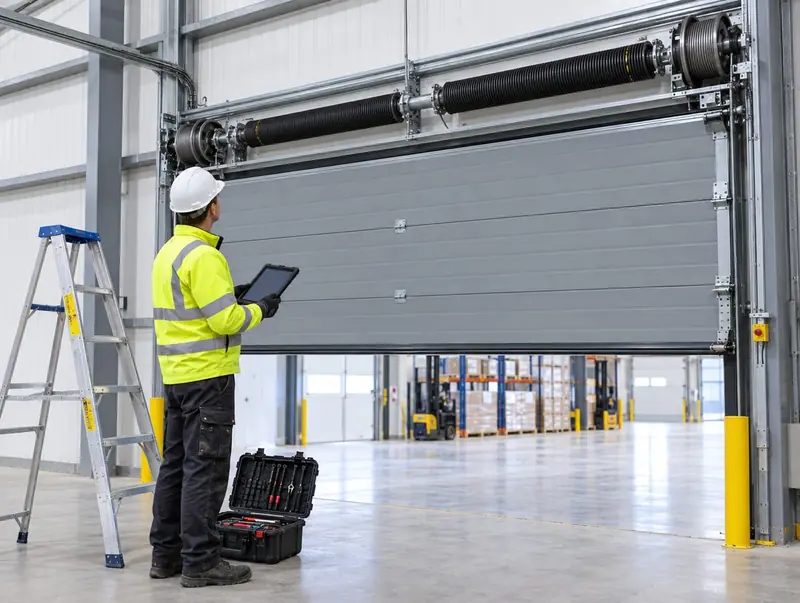
Retail distribution doorways go wrong when a peak in volume meets a door that is worn, damaged or slow. A large site may run dozens of dock positions, and one failed door or leveller means rescheduled trailers and overtime. Wear builds quickly on doors that cycle all day, while forklift and roll-cage strikes damage bottom sections, guide rails and leveller lips.
Store service yards bring a different mix: tight delivery windows, roll cages, vehicles reversing close to the building and doors that have to secure stock overnight. Heat loss through open doors affects both the distribution centre and the back of store, and mixed ambient, chilled and frozen flows need doors that keep each zone at temperature. Security is a constant concern, because loading areas are a common route for theft.
Which doors and loading bay kit suit a retail distribution centre?
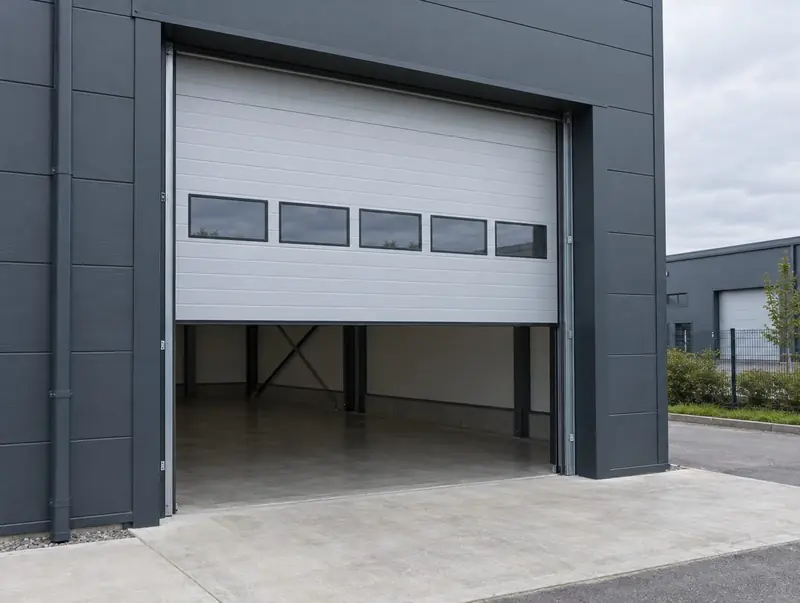
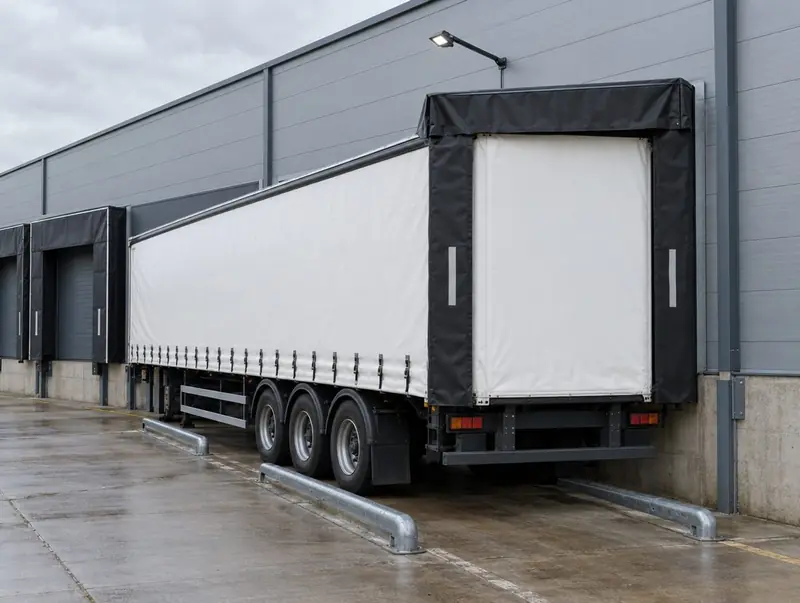
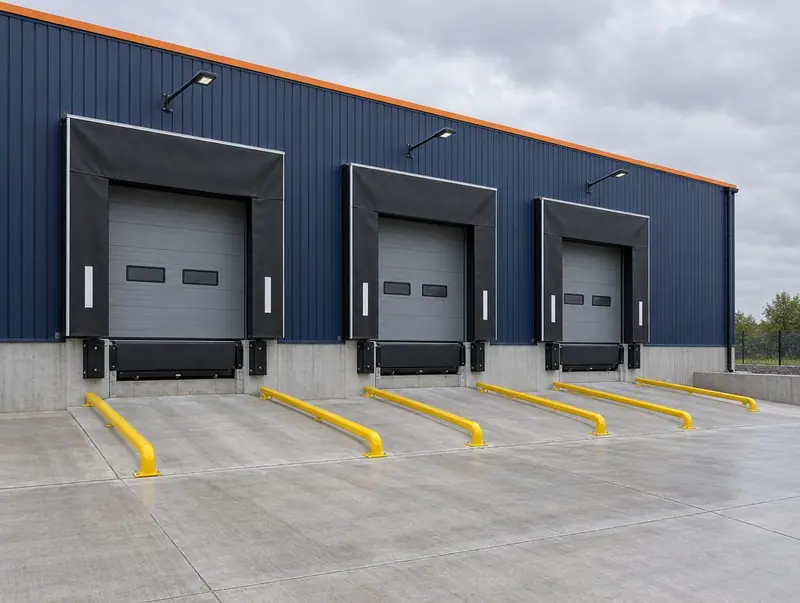
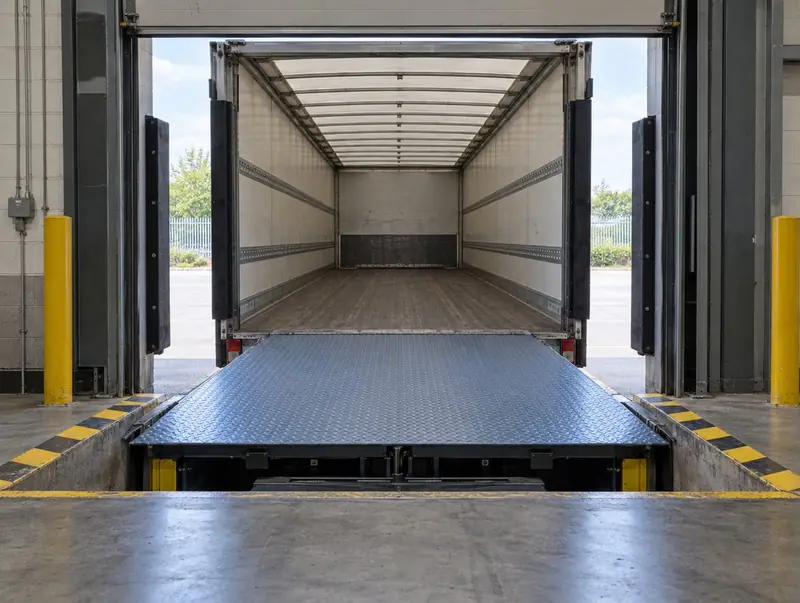
Most retail dock positions use insulated sectional overhead doors with dock levellers and dock shelters, specified as a complete loading bay so controls and interlocks work together. Shelters and door heights should be sized for the whole fleet, including double-deck trailers where they are used.
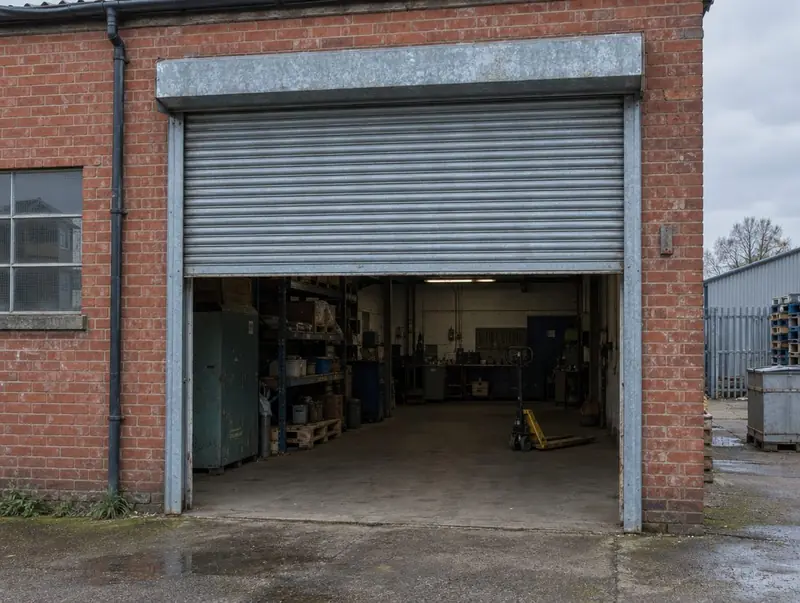
- Store service entrances: steel roller shutters, with security-rated products where your insurer or loss-prevention team asks for them.
- Ambient to chilled transfers: high-speed doors on internal routes.
- Protection: bollards, guide-rail guards and dock bumpers at every busy bay.
Telescopic-lip levellers help where trailer bed heights vary or loads need to sit right at the rear of the trailer, and dock lights help staff see inside during loading. Interlocks can stop the door opening until the vehicle is restrained, and stop the leveller working until the door is fully open, which cuts mistakes at busy times.
Standardising door types and controls across a site keeps spares simple and makes servicing quicker.
What safety and compliance points matter across many doors?
Across many doors, the main compliance task is keeping every door safe and in efficient working order, with records to prove it. The law sets no fixed service interval, but industry practice treats at least one service every 12 months as a minimum, with more frequent visits for high-cycle doors. A planned maintenance contract and a service log per door make this manageable.
In England, Wales and Scotland these duties come from the Workplace Regulations 1992 and PUWER 1998; in Northern Ireland, from the 1993 Workplace Regulations (NI) and PUWER (NI) 1999, enforced by HSENI. Loading bays also need control of vehicle movement, and HSE guidance favours engineered measures such as vehicle restraints and interlocked traffic lights over systems that rely on people. Powered doors must prevent trapping, so safety edges and photocells need testing on every visit.
How do you plan door works around peak trading?
Door works at retail sites are planned outside peak trading, usually avoiding the run-up to Christmas and major promotions, and phased so enough bays stay live. We agree a bay-by-bay plan with your site and transport teams at survey.
- Schedule replacement programmes for quieter trading periods.
- Work nights or weekends by arrangement to keep daytime bays open.
- Keep each open position secure or attended until its new door is closed.
- Commission and hand over each bay before moving to the next.
At store service yards, works are timed around delivery windows and, where possible, a door change is completed in one visit so the store is not left with an insecure opening overnight.
Survey checklist for retail distribution centres
- Number of bays and doors, with current condition
- Fleet mix, including any double-deck trailers
- Peak trading periods and blackout dates
- Ambient, chilled and frozen zones on site
- Security requirements from insurers or loss prevention
- Preferred standard door and control types
- Existing service records and service logs
Questions from retail distribution centres
Can you service every door on a large site?
Yes. We can take on all the doors and loading bay equipment on a site under a planned maintenance contract, including makes we did not install, subject to parts availability. Each door gets its own service log entry on every visit. The guide price is £85 to £175 per door per visit, ex VAT, confirmed in writing after survey.
Do dock shelters work with double-deck trailers?
They can, but the shelter has to be sized for the tallest and widest vehicle in the fleet, and the door opening and leveller must suit it too. Retractable or inflatable shelters cover a wider range of vehicles than fixed foam seals. We check your fleet mix and approach gradient at survey before specifying the shelter.
What security doors suit a store service entrance?
Steel roller shutters are the usual choice, with heavier laths, locking and guide options available. Where an insurer or loss-prevention team asks for a rated door, we supply products carrying LPS 1175 or STS 202 ratings from the manufacturer's certification. The rating belongs to the tested product, so it is installed exactly as the certificate requires.
Last updated 19 October 2026.