What do appliance bay doors need to do?
Appliance bay doors need to open fully and reliably whenever crews are called out, and to stay usable if the power fails. A door that sticks part-open is a hazard to a tall appliance leaving the bay, so dependable drives, limit switches and fully open signals matter. Doors also need to close safely behind vehicles without trapping crew members who may be walking through the bay.
The bays themselves are demanding. Fire appliances and ambulances are tall and wide, bays are often heated for kit and vehicles, and doors may cycle many times a day for calls, training and vehicle checks. Wind on exposed station frontages loads wide doors, and reversing vehicles can strike guide rails. Stations rarely close, so there is no quiet day for works and every job has to keep the station operational.
Which doors suit fire and ambulance station bays?
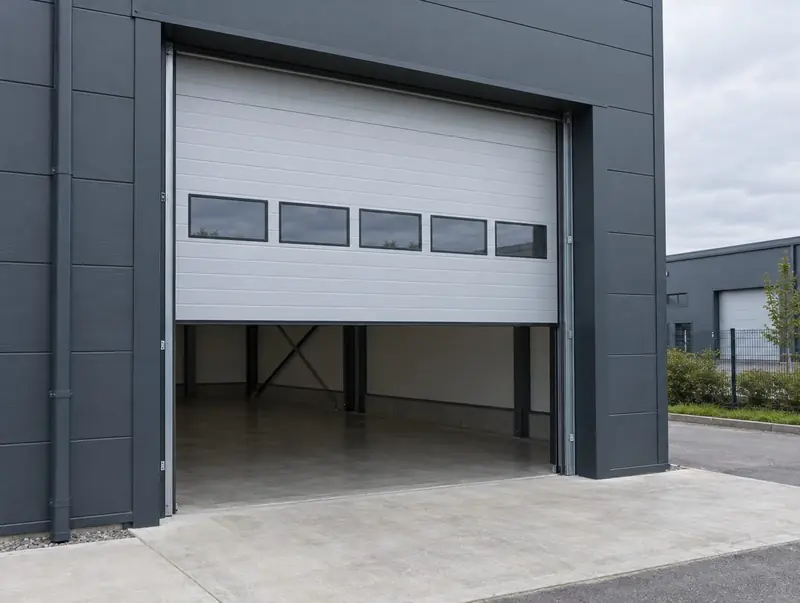
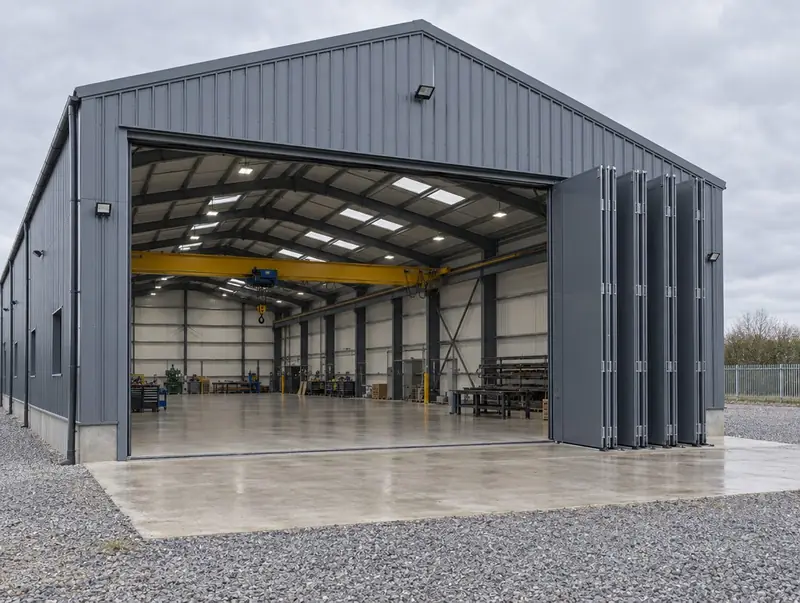
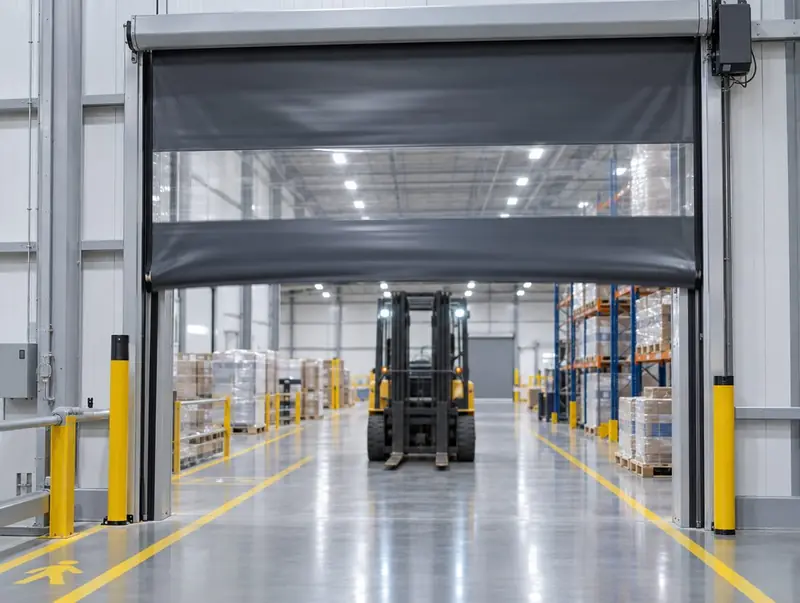
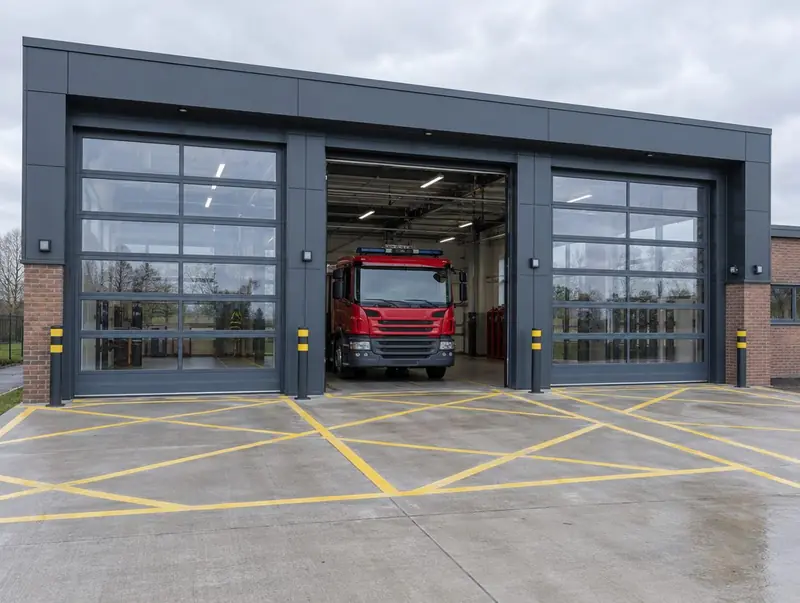
Insulated sectional overhead doors suit many appliance bays because they insulate well, carry vision panels and run on robust drives. Folding doors open sideways and suit stations where headroom is limited or the building design calls for them. High-speed doors suit bays with very frequent movements, where the product is rated for the opening size and wind exposure.
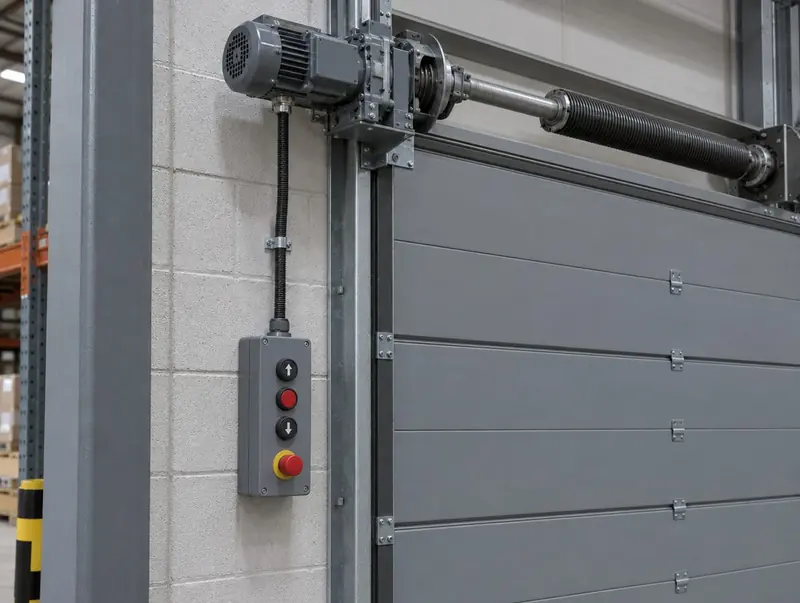
- Controls: automation that can take a signal from the station's alerting system where specified, with traffic lights or fully open indicators.
- Back-up: hand chain, crank or emergency release for manual operation, and battery back-up where the manufacturer offers it.
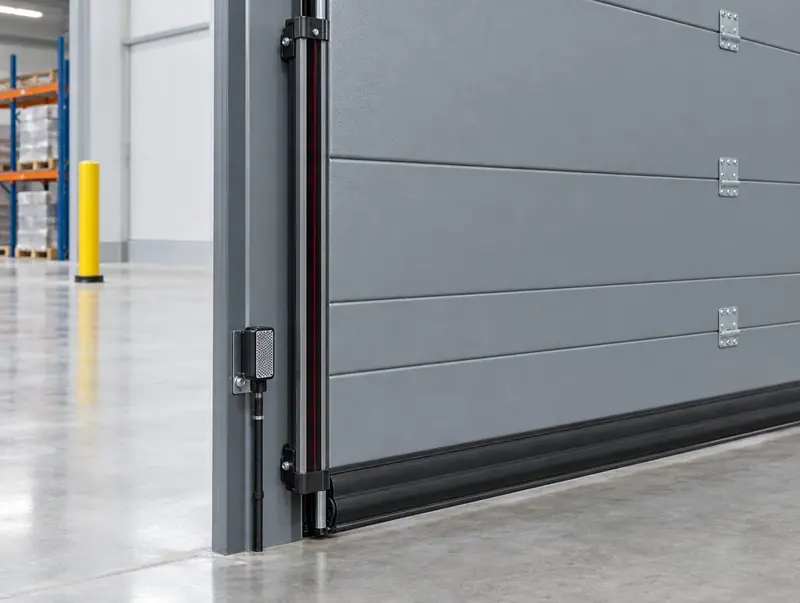
- Safety: monitored safety edges, photocells or light curtains; see safety upgrades.
Doors should be sized for the tallest appliance with room to spare, including roof-mounted equipment, and vision panels help crews see the apron before the door opens. On exposed frontages, a door with a wind load class that suits the site runs more reliably in gusts.
What safety points apply to appliance bay doors?
The key safety point is that powered bay doors must not trap people and, where safety requires, must be operable manually if the power fails unless they open automatically (Workplace Regulations 1992 in England, Wales and Scotland; the 1993 Northern Ireland regulations there). Every crew member should know how to open each door by hand.
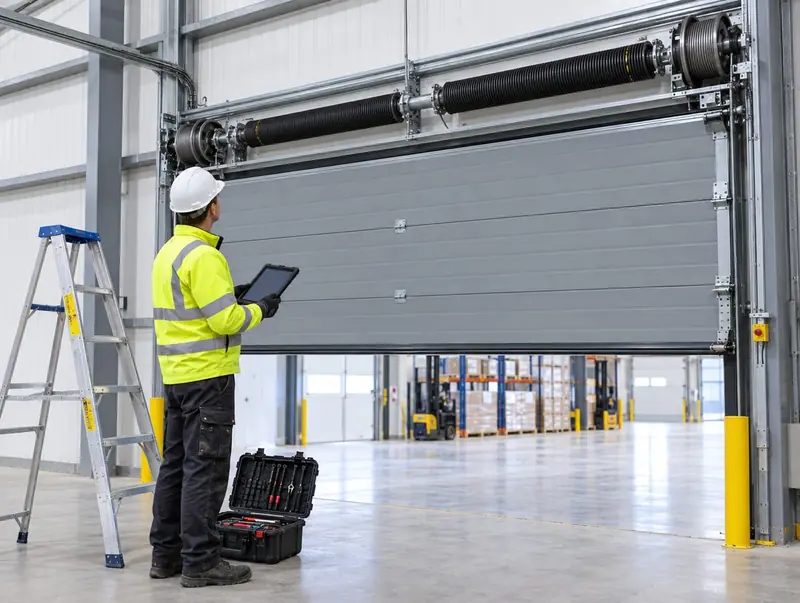
- Test manual operation and the emergency release on every service.
- Check safety edges, photocells and closing forces at each visit.
- Confirm the door signals fully open before any vehicle moves off.
- Protect guide rails with bollards or guards.
Where doors link to an alerting system, the interface should be designed and tested with the system supplier and recorded in the service records. Planned maintenance at intervals that match each door's cycle count keeps wear under control.
How do you replace bay doors while the station stays operational?
Bay doors are replaced one bay at a time while the station stays operational, with each bay planned so appliances can still leave from another door. We agree the sequence and timings with the station or estates manager at survey, and each bay is left with a working, secure door before we move to the next.
- Keep a route out for every vehicle throughout, as agreed with the station.
- Relocate vehicles temporarily where needed, by agreement.
- Brief crews on new controls and manual operation at handover.
- Follow station security, induction and escort rules.
Works are timed around training, shift changes and station activity, and the written quote sets out the programme for each bay.
Survey checklist for emergency service stations
- Appliance and vehicle heights, widths and turning space
- Door cycles per day, including training and checks
- Power supply and any back-up power at the station
- Alerting system and whether doors should link to it
- Manual operation and emergency release arrangements
- Headroom and side room at each bay
- Which bays can be out of use, and when
Questions from emergency service stations
Can appliance bay doors open automatically when a call comes in?
They can, where the station's alerting system provides a suitable signal and the door controls are specified for it. The interface is designed with the alerting system supplier, and the door still needs safety edges, photocells or light curtains so it cannot close on people or vehicles. Crews should also be able to open each door by hand if the power fails.
What happens to appliance bay doors if the power fails?
Powered bay doors should be openable by hand if the power fails, using a hand chain, crank or emergency release, depending on the door. Battery back-up is available on some drives. At handover we show crews how to open each door manually, and manual operation is tested on every service visit.
Are high-speed doors suitable for appliance bays?
They can be, where the product is rated for the opening size and the site's wind exposure. High-speed doors open much more quickly than a standard sectional door and suit bays with very frequent movements. Many stations still choose insulated sectional or folding doors for their insulation and robustness. We compare the options at survey against size, wind and use.
Last updated 19 October 2026.