What door problems do landlords and storage operators see?
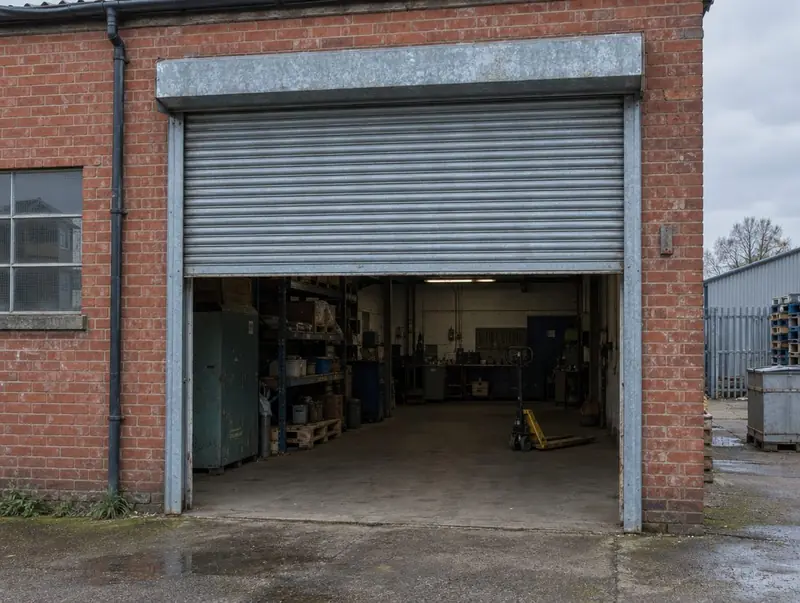
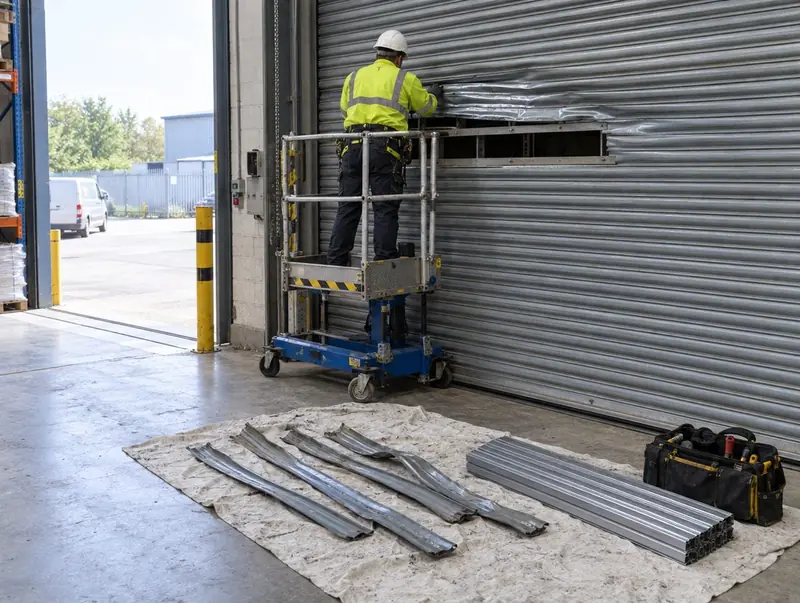
Landlords and storage operators mainly see wear, damage and security problems spread across many doors. Roller shutters on trade units are operated by different tenants with different habits, and doors damaged by vans and forklifts may go unreported until they stop working. On self-storage sites, a stuck shutter or failed lock affects customers directly.
Responsibility is another issue. Leases often split door repair and servicing between landlord and tenant, so doors miss services and records go missing when tenants change. Older estates have a mix of manual and electric shutters, some without safety edges or with motors that are no longer supported. Void units need securing, and dilapidations at lease end often include door repairs or replacement. Some insurers also set the level of protection they want on high-value stock.
Which doors suit storage units and multi-let estates?
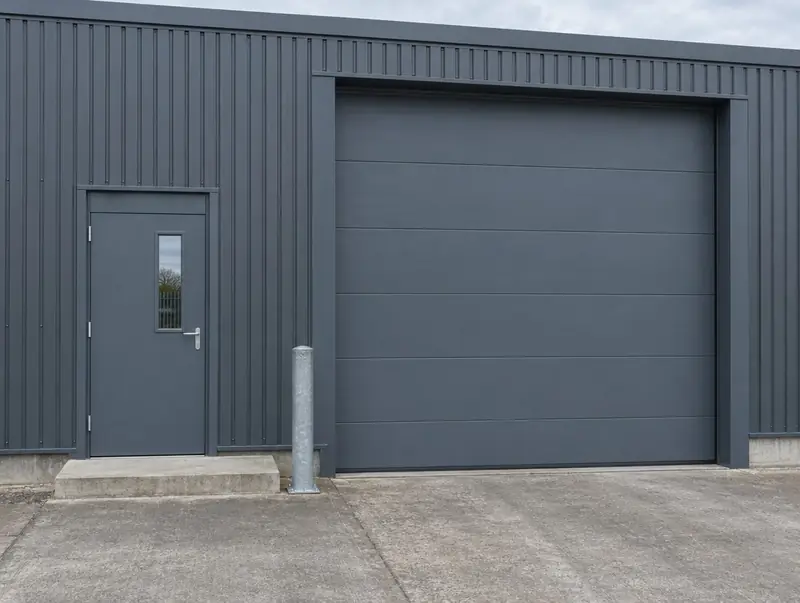
Steel roller shutters suit most trade and storage unit fronts because they are compact, secure and simple to maintain, with manual or electric operation. Insulated roller doors or sectional doors suit units where tenants heat the space or run a trade counter.
- Security: heavier laths, locking options and, where insurers ask, products carrying LPS 1175 or STS 202 ratings from the manufacturer.
- Pedestrian access and escape: steel personnel and fire exit doors.
- Estate refresh: door replacement to one standard specification across units.
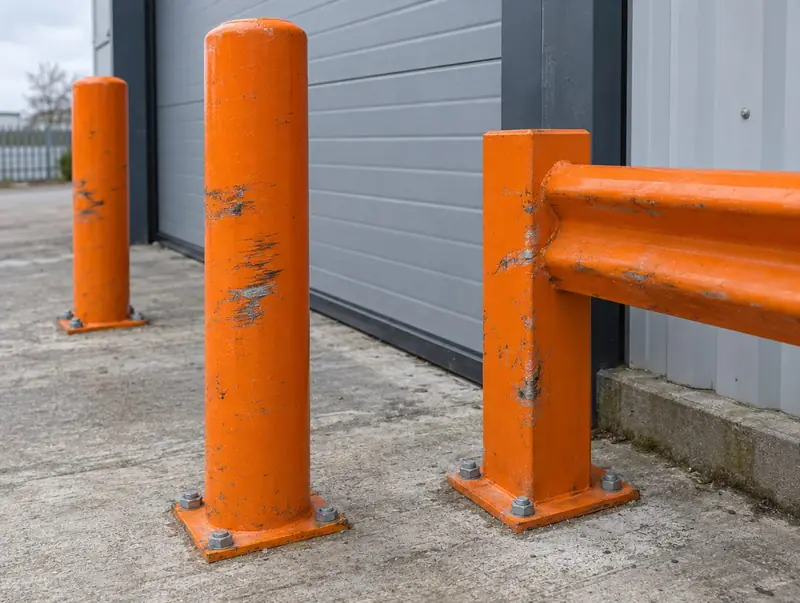
- Yards: bollards and guide-rail guards on busy units.
On self-storage sites, the main loading entrance often runs far more often than any single unit door, so an electric shutter or high-speed door with keypad or fob entry linked to customer access hours is worth considering, with good lighting at the door line.
Using the same door type and controls across an estate keeps spares, keys and servicing straightforward.
Who is responsible for door safety in a let unit?
Responsibility for door safety in a let unit depends on the lease, but workplace law places duties on employers and on anyone who controls the premises, to the extent of that control: doors must be maintained and powered doors must not trap people (Workplace Regulations 1992 in England, Wales and Scotland; the 1993 Northern Ireland regulations there). Landlords often keep shared doors and estate-wide servicing; tenants often take doors inside their unit.
- Agree who services each door and who holds its service log.
- Upgrade older electric shutters without safety edges; see safety upgrades.
- Keep fire exit doors and any fire shutters maintained under the site's fire risk assessment.
For fire safety, the duty holder is the responsible person in England and Wales, the dutyholder in Scotland and, in Northern Ireland, the person with fire safety duties, often called the appropriate person.
How do you plan door works on an occupied estate?
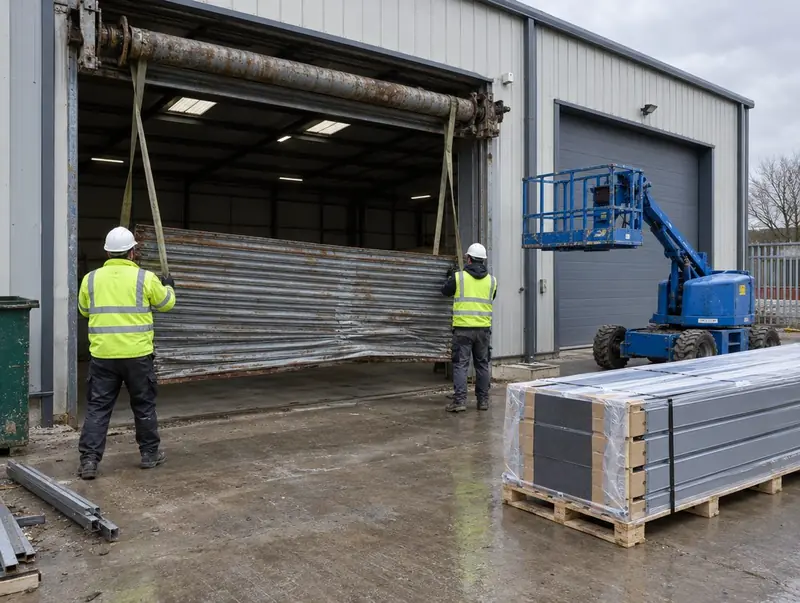
Door works on an occupied estate are planned around tenants, usually unit by unit, with notice to each occupier and access agreed through the landlord or agent. Void periods between tenancies are the easiest time to replace doors.
- Agree access, notice periods and contacts for each unit.
- Replace doors in void units before new tenants move in.
- Complete each door change in one visit where possible, so the unit is secure at the end of the day.
- Report on the condition of every door for budgets and dilapidations.
A planned maintenance contract across the estate keeps service logs in one place, and repairs can be booked as faults are reported.
Survey checklist for self-storage sites and trade units
- Number of units and door types on the estate
- Lease split of repair and servicing duties
- Manual or electric operation, and power at each door
- Security level required by insurers
- Void units and upcoming lease ends
- Fire exits and any fire shutters on site
- Access arrangements and tenant contacts
Questions from self-storage sites and trade units
Should landlords or tenants service unit doors?
It depends on the lease. Many leases make the tenant responsible for doors serving their unit and the landlord responsible for shared or estate doors, but wording varies. Whoever services a door should keep its service log and pass it on at lease end. We can service doors for landlords, agents or tenants and invoice whichever party instructs us.
Can you replace roller shutters between tenancies?
Yes. Void periods are the easiest time to replace or upgrade shutters, because there is no tenant to work around. We survey, give a fixed written quote and, once the shutter is made, fit it in a planned visit so the unit is secure the same day wherever possible. Lead times depend on the door and manufacturer and are confirmed at quote.
What does a replacement roller shutter for a unit cost?
A single-skin steel electric roller shutter up to about 4 by 4 metres has a guide price of £2,395 to £5,495, and an insulated electric roller door £3,195 to £7,495, supplied and installed. Removing and disposing of the old door is a guide £345 to £1,195. All prices are guides, ex VAT, confirmed in writing after survey.
Last updated 19 October 2026.