What makes hangar doors difficult?
Hangar doors are difficult because of their size and the wind. A wide door leaf acts like a sail, so wind load sets the structure of the door, its guides and the building that carries it. Exposed airfields see strong gusts, and a door that cannot be closed or held safely in wind is a risk to aircraft and people.
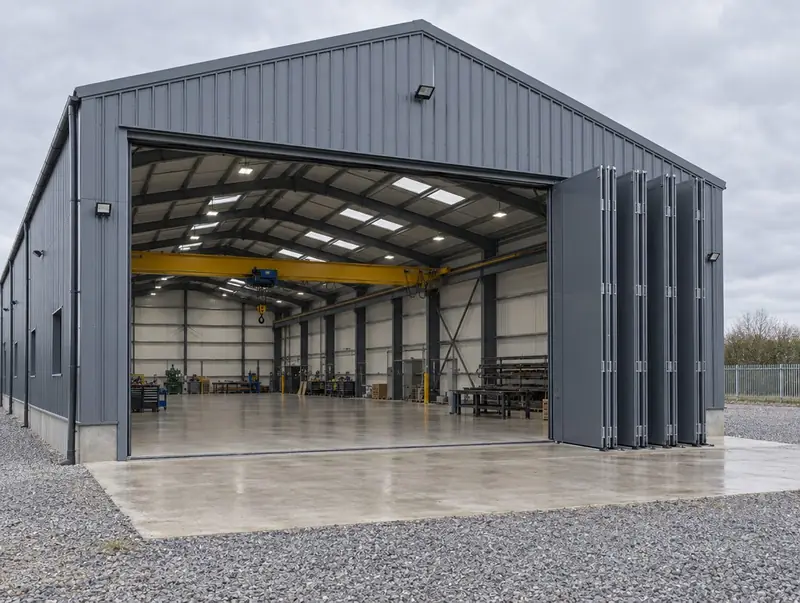
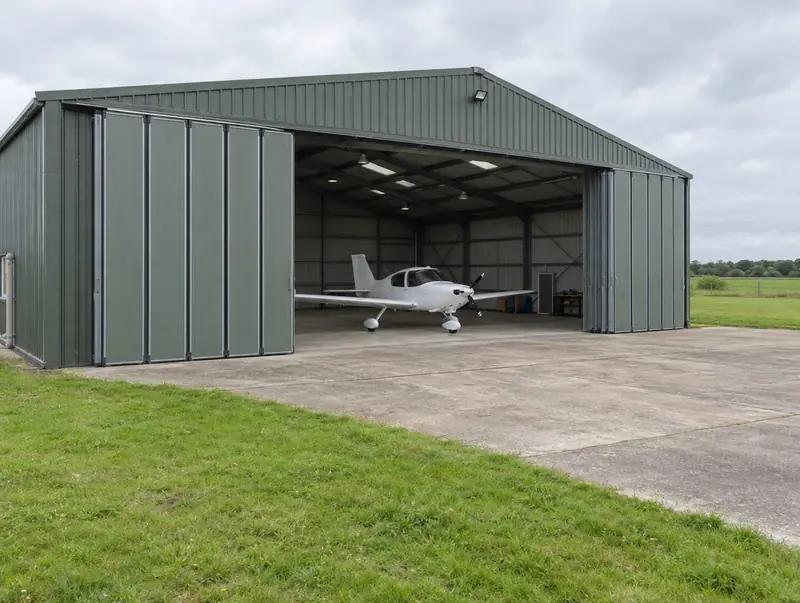
Openings must also clear wingspans and tail heights, which leads to multi-leaf sliding doors, tail cut-outs or vertical-lift doors. Floor tracks collect debris, ice and water, and a blocked or damaged track can stop a door moving. Large doors take time to open, which affects how quickly aircraft can be moved in and out, and heat loss through a big opening is significant in a heated maintenance hangar. Airside sites also add security controls, passes and escorts to every visit.
Bottom-rolling or top-hung hangar doors?
Bottom-rolling hangar doors carry the weight of each leaf on wheels running in a floor track, with only light guidance at the top, so the building structure carries less load. Top-hung doors hang from an overhead track and are guided at the bottom, which keeps the floor clear of heavy rails but needs a structure that can carry the full door weight.
- Bottom-rolling: suits most new and existing hangars; floor tracks need drainage, cleaning and protection from ice.
- Top-hung: suits sites where floor tracks are impractical; the supporting steelwork needs checking by a structural engineer.
- Vertical-lift fabric doors: fold upwards to clear the full width, with no floor track.
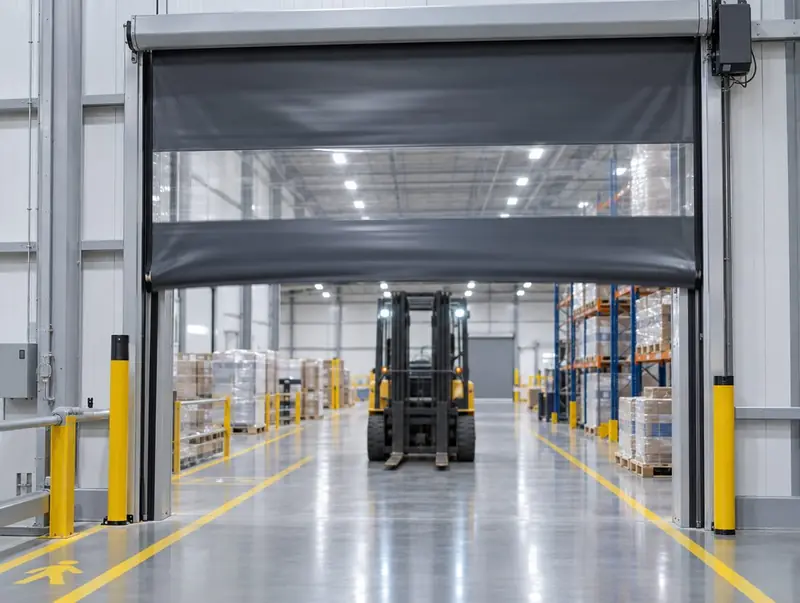
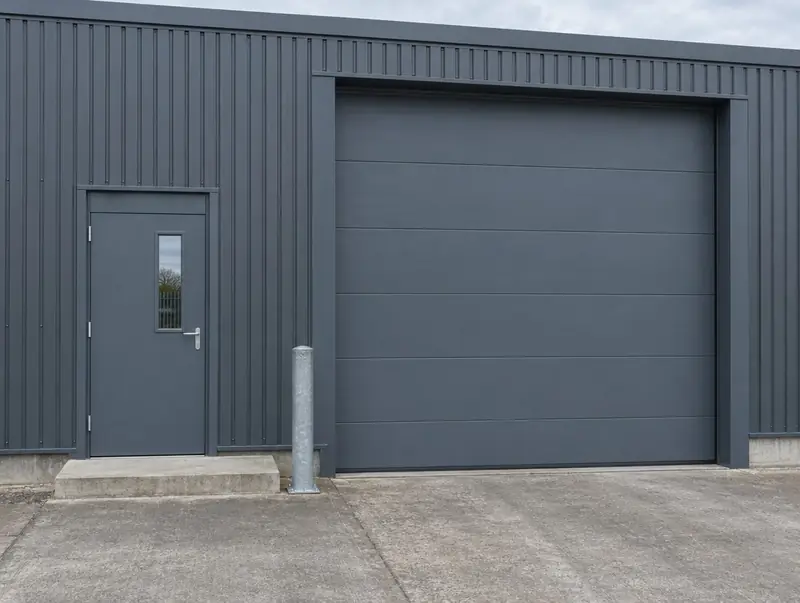
- Support buildings: sectional doors, high-speed doors and personnel doors.
See hangar and large-span doors and sliding and folding doors for the options in more detail.
What safety and wind-load points apply to hangar doors?
Hangar doors must be designed for the wind loads at the site, which are calculated for the building's location and exposure using the Eurocode for wind actions (BS EN 1991-1-4 with its UK National Annex). Where a door falls within BS EN 13241, the manufacturer declares its wind load class, classified to BS EN 12424, on the Declaration of Performance, and the building must be able to carry the loads the door transfers into it.
- Powered leaves need safety edges and controls that prevent trapping, plus manual operation where safety requires.
- Wind limits for operating the door should be set out in the user instructions and followed.
- Wicket doors should be switched so the leaf cannot move while they are open.
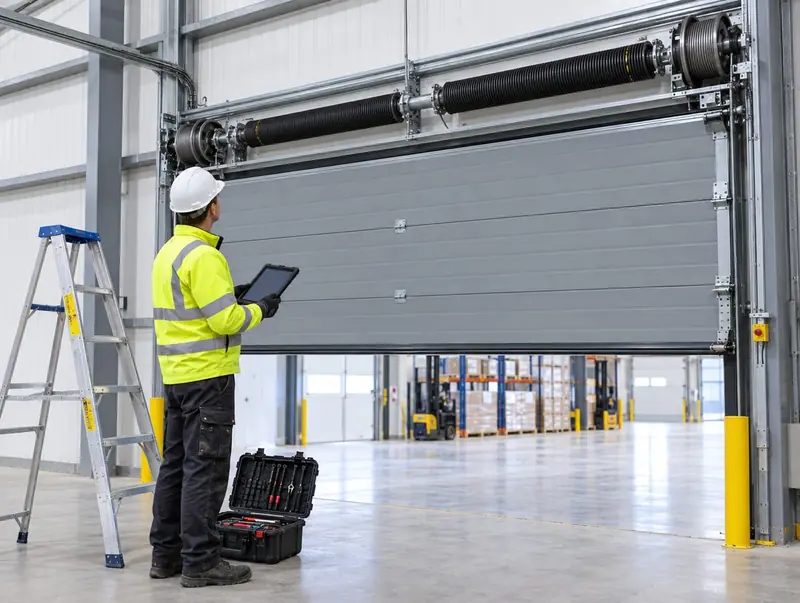
- Tracks, wheels, guides and drives need regular inspection under a planned maintenance contract.
Workplace law on doors applies as at any workplace: the 1992 Workplace Regulations in Great Britain and the 1993 regulations in Northern Ireland.
How do you install hangar doors around flying operations?
Hangar door works are planned around flying and maintenance schedules, with the hangar either emptied or the work area screened off from aircraft. Large doors are often installed in stages over several weeks, so we agree a programme with your operations team and any airport operator before work starts.
- Arrange airside access, passes, escorts and vehicle permits in advance.
- Keep temporary weatherproofing and security in place while leaves are out.
- Agree lifting plans and exclusion zones for crane work near aircraft.
- Control foreign object debris on aprons and inside the hangar.
Hangar doors are priced on survey, typically from £39,995 as a guide, ex VAT, with the fixed price confirmed in writing after survey.
Survey checklist for airfields and hangar operators
- Clear opening width and height, including tail height
- Aircraft types housed now and planned
- Site exposure and prevailing wind direction
- Condition of existing floor tracks, drainage and structure
- Airside access rules, passes and escort needs
- Flying or maintenance windows for the works
- Heating and insulation needs inside the hangar
Questions from airfields and hangar operators
How much does a hangar door cost?
Hangar and large-span doors are priced on survey, because size, wind load, structure and drive type vary so much. As a guide they typically start from £39,995, ex VAT. The fixed price is confirmed in writing after survey, and the quote sets out which structural checks or groundworks are included and what falls to others.
Can an existing hangar door be motorised?
Often, yes. Many manual sliding hangar doors can be fitted with drive units on each leaf, with controls and safety edges added, provided the tracks, wheels and leaves are in good condition. Converting a manual door to power makes the converter the manufacturer under supply of machinery law, so the work includes a risk assessment, testing and a Declaration of Conformity.
Do hangar doors need a wind load rating?
In practice, yes. A hangar door has to be designed for the wind pressure at your site, and the building must carry the loads the door transfers into it. Where the door falls within BS EN 13241, the manufacturer declares its wind load class on the Declaration of Performance. Exposed airfields usually need a high class or a bespoke design check.
Last updated 19 October 2026.