Why do factory doorways cause problems?
Factory doorways cause problems when a door built for occasional use ends up on a production route. Internal doors between process areas can see heavy forklift and pallet truck traffic, so slow doors get propped open, heat and dust move between zones and noise spreads across the site. Doors left open also undermine separation between clean and dirty areas, paint or finishing shops and goods-in.
Damage and uptime are the other issues. A forklift strike on a roller shutter curtain or guide rail can take a door out of action until it is repaired, and a stuck door on a key route can stop a line. Large external openings face wind and weather, while doors near ovens, washdown areas or chemical processes need materials and seals that cope with heat, moisture or corrosive atmospheres.
Which doors suit production routes and goods openings?
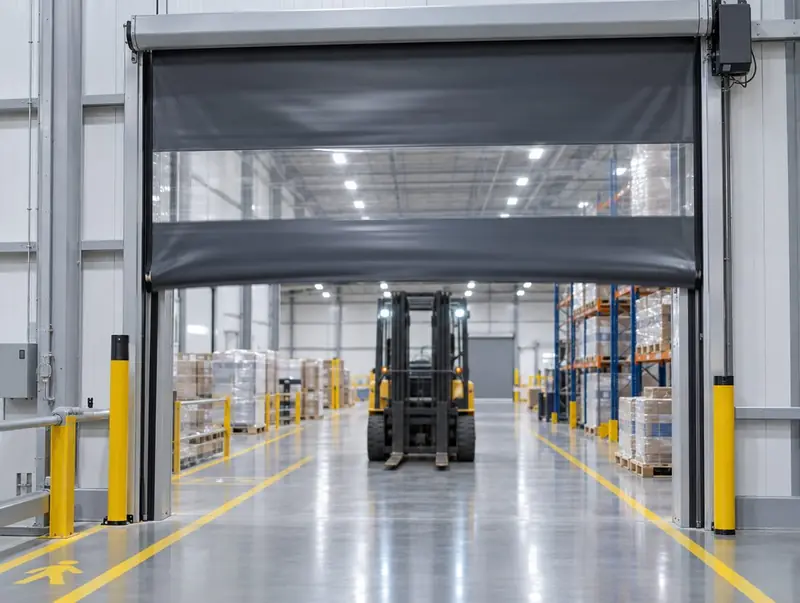
High-speed doors suit internal production routes because they open and close quickly enough that people stop propping them open. Fabric high-speed doors with self-repairing curtains recover from minor knocks; spiral doors with rigid slats suit external openings and higher security or insulation needs.
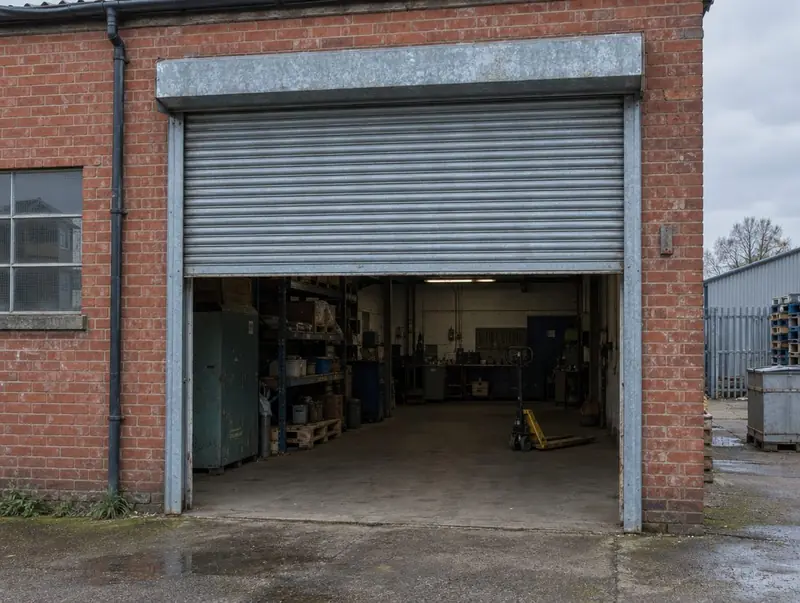
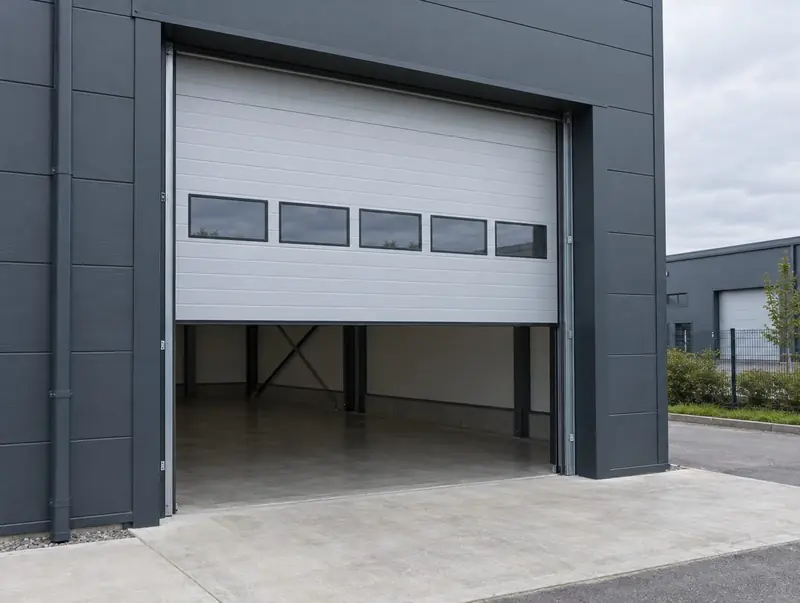
- External goods openings: roller shutters or sectional overhead doors, insulated where the space is heated.
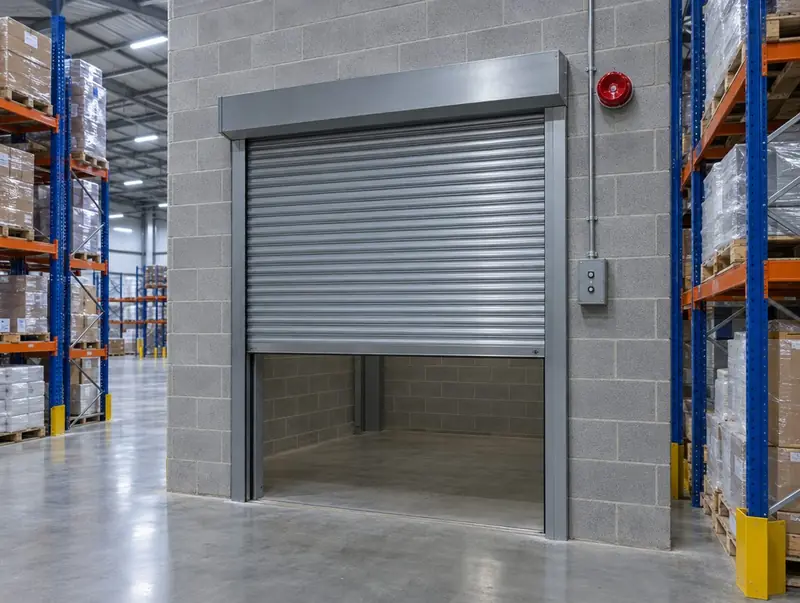
- Compartment lines: fire shutters supplied with the manufacturer's test evidence, linked to the fire alarm where the fire strategy requires.
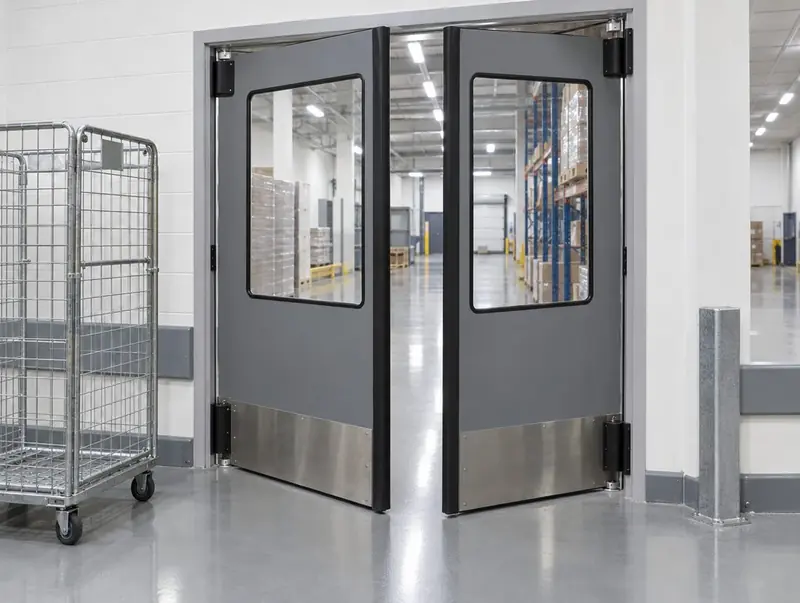
- Pedestrian and trolley routes: impact traffic doors with vision panels.
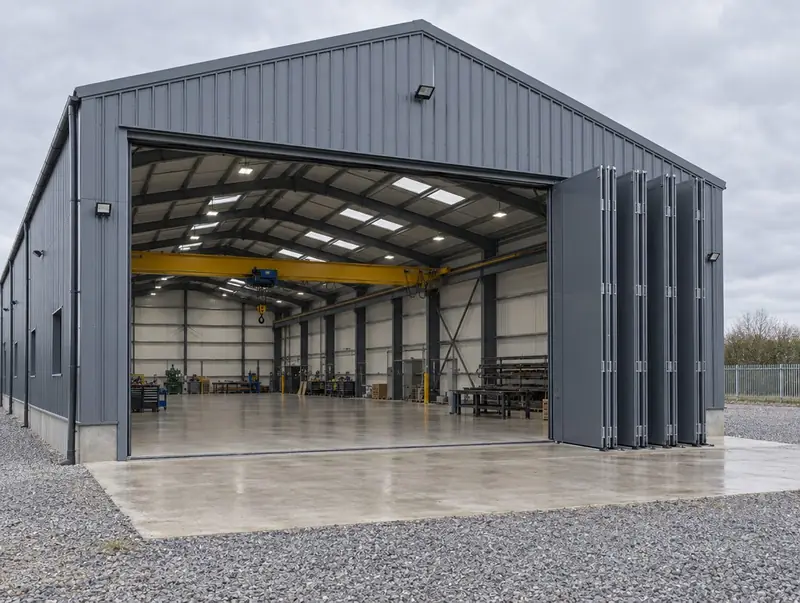
- Plant deliveries: large sliding or folding doors where very wide openings are needed occasionally.
Activation by induction loop, radar or pull cord keeps traffic moving without drivers getting off their trucks.
What safety rules apply to doors in a factory?
Doors in a factory are covered by general workplace law: in England, Wales and Scotland the Workplace (Health, Safety and Welfare) Regulations 1992 require doors to be maintained and powered doors to have features that prevent trapping, and Northern Ireland has equivalent 1993 regulations. Where a door is used as work equipment, PUWER 1998 (PUWER (NI) 1999 in Northern Ireland) also requires it to be kept in efficient working order.
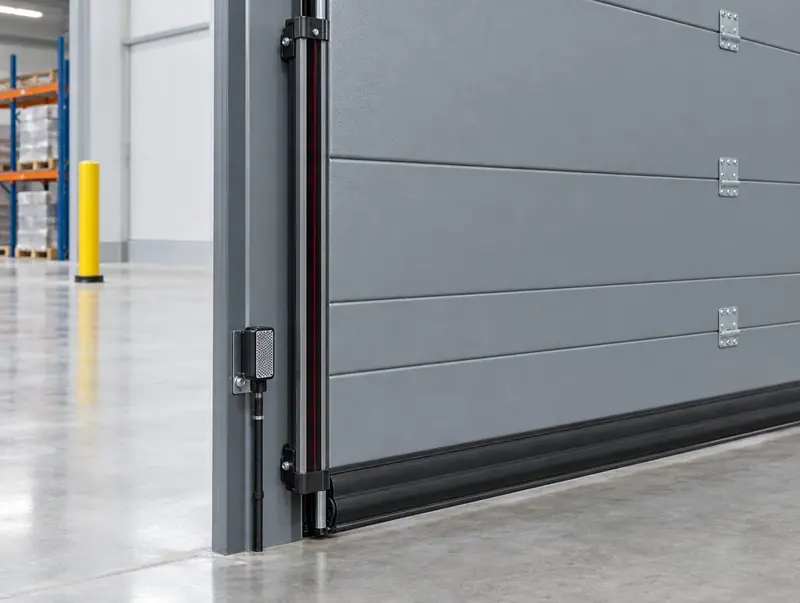
In areas classified for explosive atmospheres under the Dangerous Substances and Explosive Atmospheres Regulations 2002 in Great Britain, or the 2003 Northern Ireland regulations, motors, controls and sensors must be suitable for the zone, which narrows the product choice. Fire shutters must be installed and maintained so they perform as tested and certified by the manufacturer. Where forklifts and pedestrians share a doorway, a separate pedestrian door and clear marking help. Retrofit safety upgrades such as safety edges and light curtains bring older powered doors up to date.
How do you fit new doors without stopping production?
New factory doors are usually fitted during planned shutdowns, weekends or between shifts, with each opening out of use for as short a time as possible. At survey we look at what has to keep moving through each doorway and agree a sequence with your production and maintenance managers.
- Work on one opening at a time where routes must stay open.
- Install out of hours by arrangement, including shutdown windows.
- Agree permits to work, hot works and isolations with your team.
- Keep temporary barriers or screens in place while an opening is out of use.
- Check asbestos information before removing doors from older buildings.
Fire shutter changes need extra care, because a compartment line should not be left unprotected without an agreed interim measure. We plan these with your fire risk assessor and the person with fire safety duties: the responsible person in England and Wales, the dutyholder in Scotland, or in Northern Ireland the person often called the appropriate person.
Survey checklist for factories and production sites
- Doors on production routes and how often each runs
- Traffic types: forklifts, pallet trucks, pedestrians, cranes
- Headroom, side room and overhead services at each opening
- Heat, dust, washdown or corrosive conditions
- Fire compartment lines and fire alarm interface needs
- Any areas classified for explosive atmospheres
- Shutdown or out-of-hours windows for fitting
Questions from factories and production sites
Are high-speed doors worth it on internal routes?
They often are where an internal door runs many times an hour or tends to be left open. Faster cycles cut heat loss, draughts and dust movement and reduce waiting time for forklifts. Fabric versions with self-repairing curtains also recover from light impacts. A fabric high-speed door has a guide price of £7,495 to £15,995, ex VAT, confirmed in writing after survey.
Can fire shutters be linked to our fire alarm?
Yes. Fire shutters are commonly released to close on a fire alarm signal, with the interface designed following BS 7273-4 and the fire strategy for the building. The alarm side is normally handled by your fire alarm contractor, and we coordinate with them on the signal and the shutter's control panel. The shutter must be installed and maintained so it closes as tested and certified.
Can doors be fitted in an explosive atmosphere zone?
They can, but every electrical part on the door must be suitable for the zone classification, including the motor, controls and sensors. That limits the products available and usually lengthens lead times. Tell us about any classified zones before survey and share the area classification drawing, so we can quote equipment that matches it.
Last updated 19 October 2026.