What goes wrong with warehouse doorways?
Most warehouse doorway problems come down to traffic, heat loss and downtime. A busy dock door may cycle hundreds of times a day, so springs, cables, motors and safety edges wear far faster than on a door that opens twice a shift. Forklift strikes to guide rails and bottom sections are a common reason a dock door ends up out of action, and one damaged door can block a loading position at the worst moment.
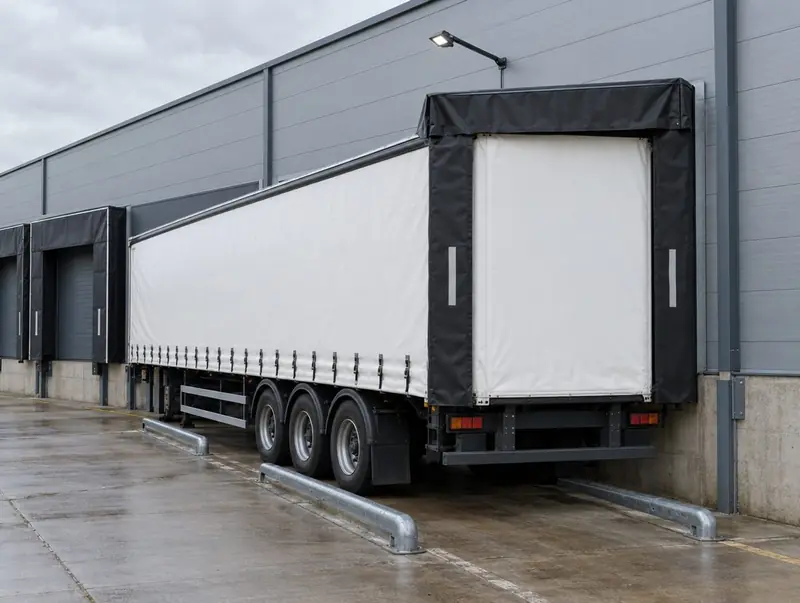
Heat and weather are the second issue. Every open door lets conditioned air out and wind, rain and dust in, and on exposed sites gusts put real load on a large door leaf. Gaps around a parked trailer do the same: without a shelter or seal, the bay leaks heat for the whole time the vehicle is being loaded. Security matters too, because stock is valuable and yards are often quiet at night.
Which doors and loading equipment suit a distribution centre?
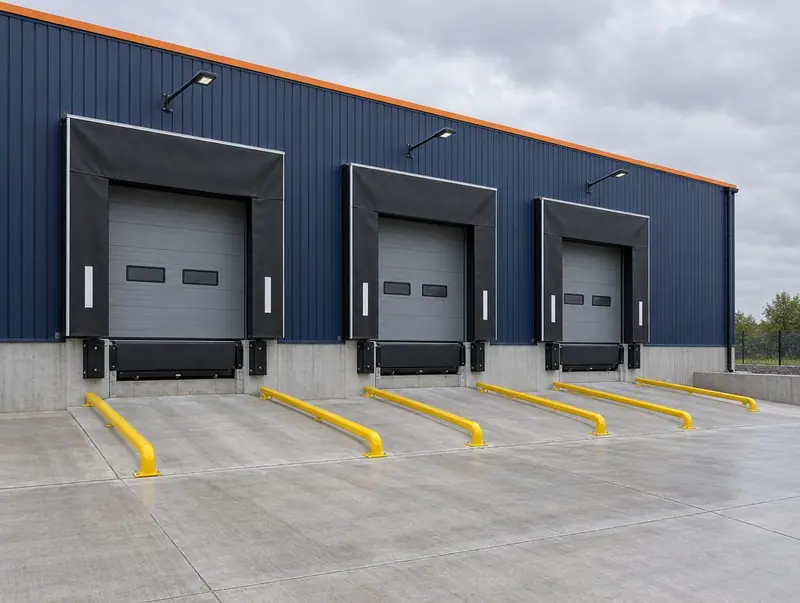
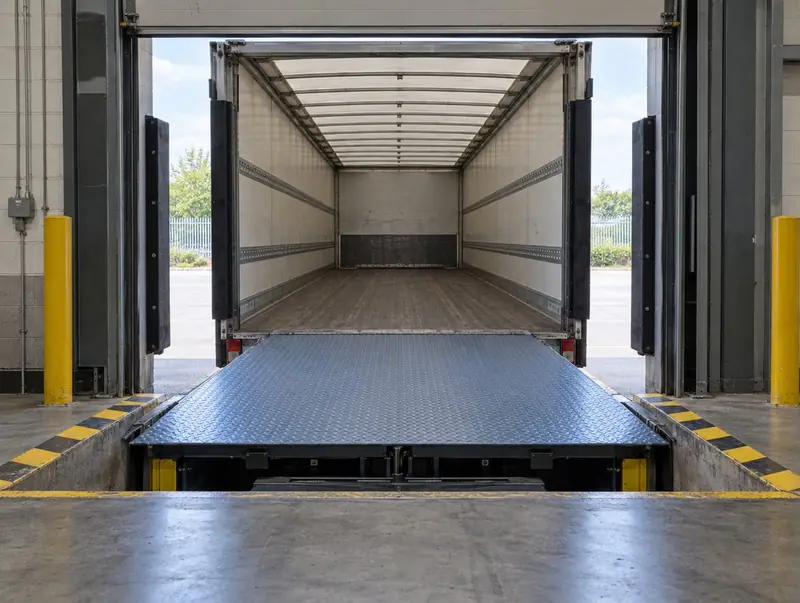
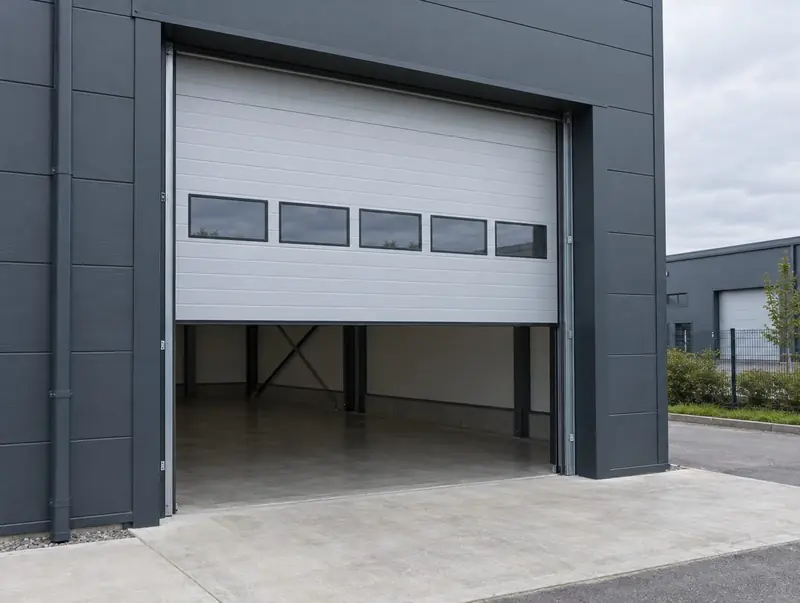
For most dock positions the standard choice is an insulated sectional overhead door paired with a dock leveller and a dock shelter or seal. Sectional doors insulate and seal well and can include vision panels for daylight. Swing-lip levellers suit most curtainsider and box trailer work; telescopic-lip levellers give more control when the lip needs to land precisely, for example right at the end of the bed.
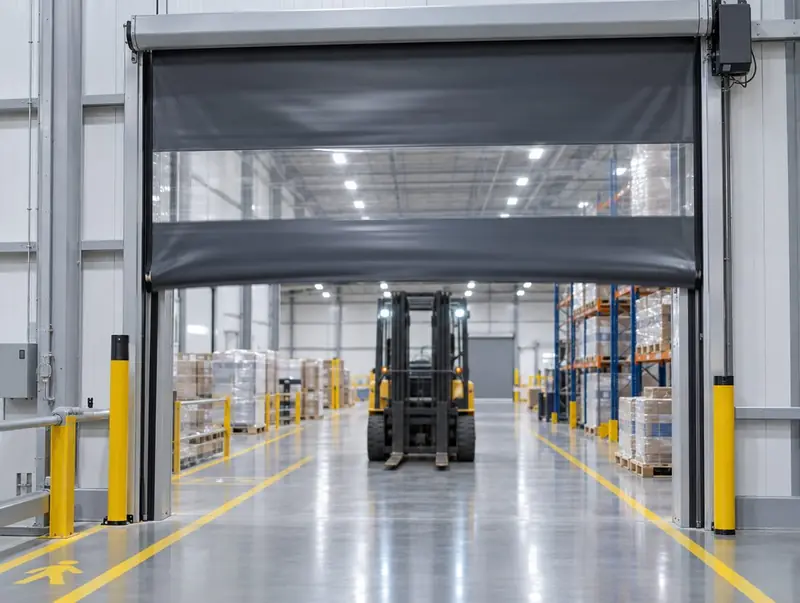
- Internal routes: high-speed doors between ambient, chilled and dispatch areas cut open time without slowing forklifts.
- Level-access doors: insulated roller doors or sectional doors with induction loop or radar activation.
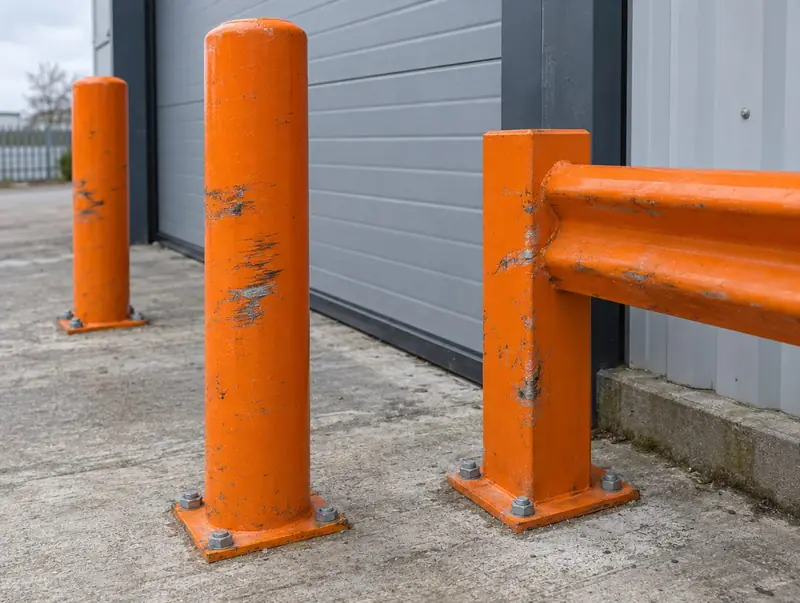
- Protection: bollards, guide-rail guards and dock bumpers cost far less than a damaged door.
For new bays or full refurbishment, a complete loading bay package coordinates door, leveller, shelter, restraint and controls so they work as one system.
What safety and compliance points matter at a loading bay?
The biggest loading bay risks are a vehicle moving while a forklift is on the trailer, and people being struck or trapped by a powered door. HSE guidance on workplace transport says systems that rely on people's actions are less reliable than engineered ones, so vehicle restraints, traffic lights and interlocks between door, leveller and restraint are worth considering at design stage.
Powered doors must have features that prevent trapping and, where safety requires, must be operable manually unless they open automatically on power failure. That duty comes from the Workplace (Health, Safety and Welfare) Regulations 1992 in England, Wales and Scotland, and the 1993 Northern Ireland regulations there. Safety edges, photocells and light curtains should be tested and closing forces checked at commissioning and on every service. If we assemble a powered door from components or convert a manual door to power, we take on the manufacturer's duties under the Supply of Machinery (Safety) Regulations 2008, including the Declaration of Conformity.
How do you replace dock doors without stopping dispatch?
Dock door and leveller replacement is usually phased one or two bays at a time, so the rest of the dock keeps working. We agree the sequence with your transport and shift managers at survey, and the written quote sets out which positions are out of use and for how long.
- Night, weekend or quiet-shift working by arrangement.
- Temporary security for open positions, such as a temporary panel, or keeping the opening attended until the new door is closed.
- Leveller pits prepared or modified in advance where civil works are needed.
- Old doors stripped out and removed from site.
- New doors commissioned, force-tested and handed over with paperwork before the bay goes live.
On multi-bay sites, a planned maintenance contract then keeps every door on the same service schedule.
Survey checklist for warehouses and distribution centres
- Number of dock and level-access doors, with sizes
- Dock height and the range of trailers you load
- Approach gradient and any yard slope at each bay
- Door cycles per day and peak periods
- Power at each door: single-phase or three-phase
- Restraints, traffic lights or interlocks wanted
- Windows for works: nights, weekends or quiet shifts
Questions from warehouses and distribution centres
Do we need vehicle restraints at our loading bays?
No single rule names vehicle restraints, but you must control the risk of vehicles driving away early or creeping during loading. HSE guidance says engineered measures are more reliable than ones that rely on people, so restraints, interlocked traffic lights or key control systems are common choices. The right option depends on your fleet, traffic and risk assessment, which we review at survey.
Can you replace one dock door at a time?
Yes. Most dock replacements are phased bay by bay so the rest of the dock keeps working. We agree the order with you at survey, and the written quote shows which positions will be out of use and for roughly how long. Where a leveller pit needs civil work, that can often be done ahead of the door change to shorten downtime.
Should dock doors be sectional doors or roller shutters?
Most dock positions use insulated sectional overhead doors because they seal well around the opening and insulate better than single-skin shutters. Insulated roller doors suit openings where headroom is too tight for sectional tracks. We compare both at survey against headroom, heat loss, wind exposure and how often the door runs.
Last updated 19 October 2026.