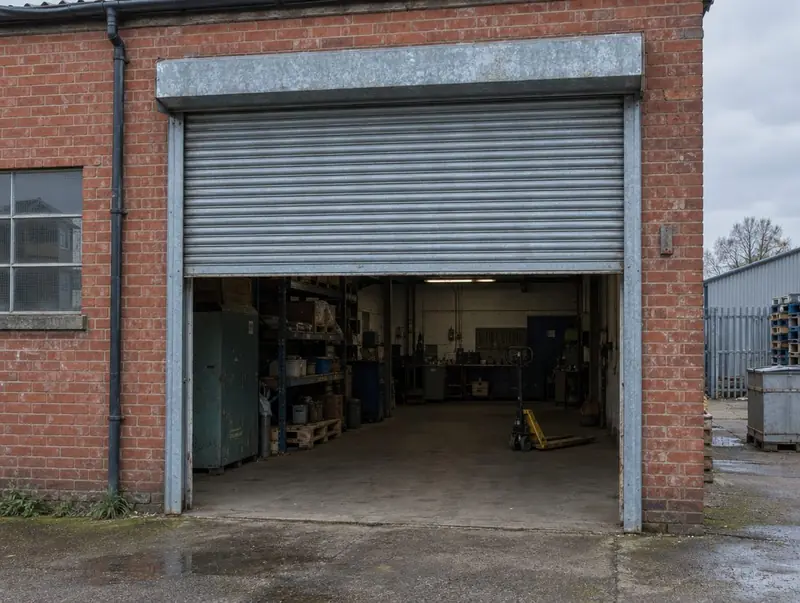
What problems do depot doors face?
Depot doors face heavy vehicles, corrosion and long hours. Refuse collection vehicles, gritters, sweepers and vans leave early and return late, often in bad weather, so doors cycle hard at the start and end of every shift. Road salt from gritting is highly corrosive and attacks steel curtains, guides and fixings, especially near salt barns and wash bays.
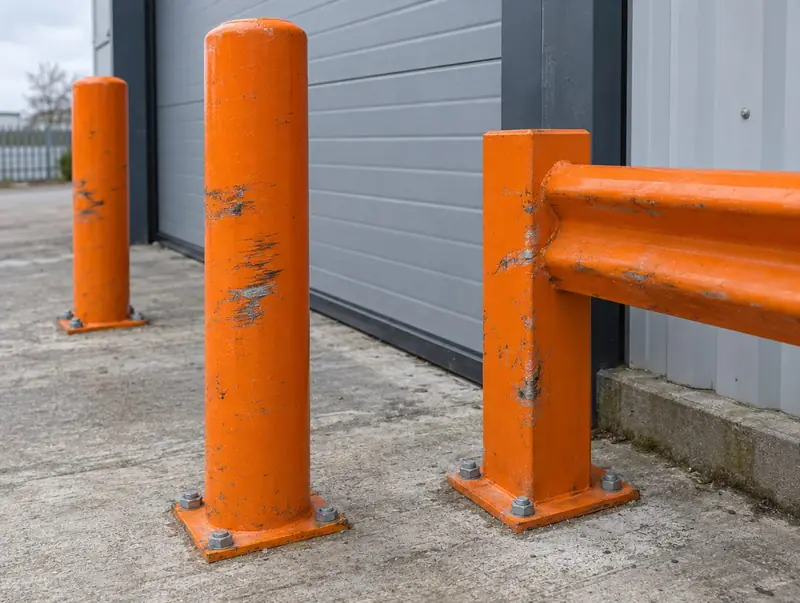
Impact damage from large vehicles is common, and a door that fails shut can stop a fleet leaving on time. Many depots are older buildings with doors of mixed makes and ages and patchy service records. Security matters too: depots hold vehicles, fuel, tools and stock, and some sit on edge-of-town sites that are empty at night. Budget cycles mean replacement is often planned years ahead, with repairs keeping old doors going in between.
Which doors suit vehicle bays, salt barns and stores?
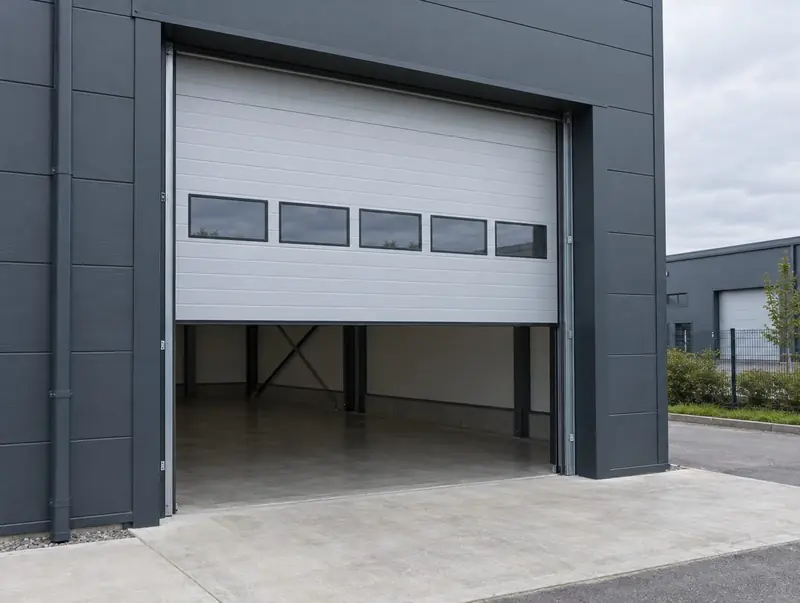
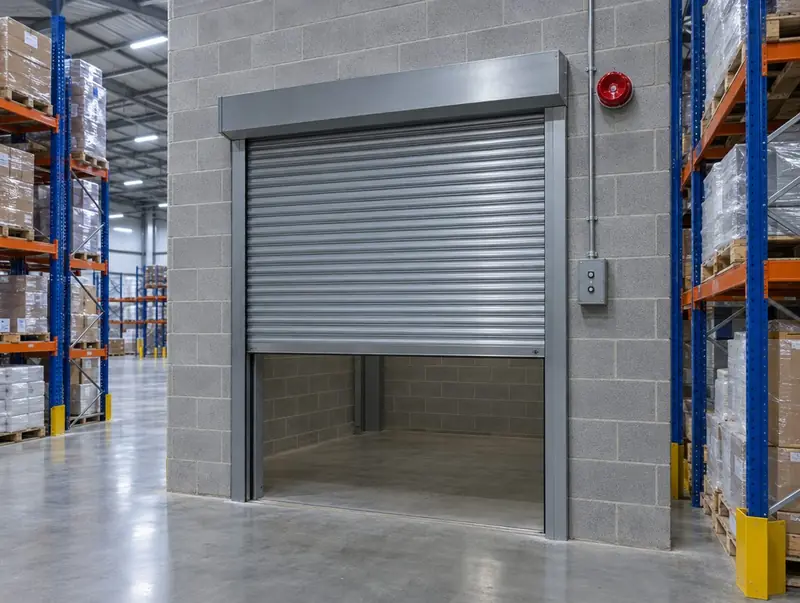
Steel roller shutters and insulated sectional overhead doors suit most depot vehicle bays, with galvanised or coated finishes and stainless fixings where salt is present. Heavier-gauge laths and reinforced guides handle the knocks.
- Salt barns and gritter bays: corrosion-resistant finishes and drives mounted away from salt spray.
- Workshops and offices: insulated doors in heated spaces.
- Compartmented buildings: fire shutters supplied with the manufacturer's test evidence.
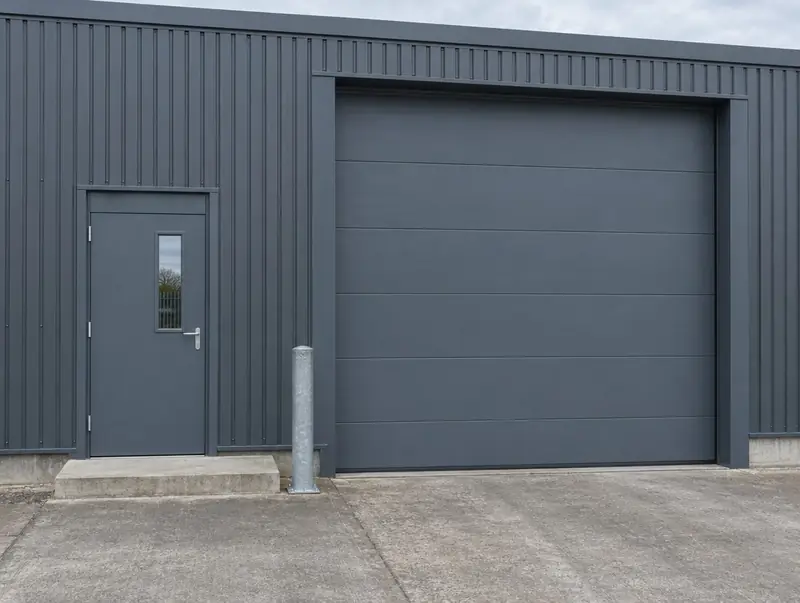
- Pedestrian access: steel personnel and fire exit doors.
- Protection: bollards and guide-rail guards at each bay.
Where a depot has many bays on one elevation, matching doors and drives across the frontage makes them easier for staff to operate and for engineers to carry the right parts. Bays facing the prevailing wind may need a door with a higher wind load class, and vision panels help drivers see the door line as they approach.
Standardising on a small number of door types across an estate makes spares and servicing simpler.
What compliance points matter on public-sector sites?
Public-sector clients need doors kept safe, maintained and recorded, often across many sites. Workplace law requires doors to be maintained and powered doors to prevent trapping (Workplace Regulations 1992 in England, Wales and Scotland; the 1993 Northern Ireland regulations there). Fire shutters must be maintained so they perform as certified, with the duty falling on the responsible person in England and Wales, the dutyholder in Scotland and, in Northern Ireland, the person with fire safety duties, often called the appropriate person.
- Construction work falls under CDM 2015 in Great Britain and CDM (Northern Ireland) 2016.
- Older buildings need asbestos information before doors are removed or fixings drilled.
- Each door should have a service log that survives staff and contractor changes.
We provide risk assessments, method statements and handover documents for each job, and a planned maintenance schedule can cover a whole estate.
How do you plan works around front-line services?
Depot works are planned so fleets can still leave and return on time, usually by taking one bay out of use at a time and working after vehicles have gone out. We agree the programme with your depot and fleet managers at survey.
- Start after the morning run-out and finish before vehicles return.
- Avoid the gritting season for bays that serve gritters where possible.
- Keep open bays secure or attended until the new door is closed.
- Follow site inductions, permits and traffic management plans.
For tendered work we can price to your specification and pricing format, and the written quote sets out the programme and payment terms.
Survey checklist for council and public sector depots
- Vehicle types and sizes using each bay
- Run-out and return times for the fleet
- Salt barns, wash bays or other corrosive areas
- Asbestos register for each building
- Fire strategy and compartment lines
- Existing door makes, ages and service records
- Procurement route and documents required
Questions from council and public sector depots
Can you work to our procurement and documentation requirements?
Yes. We can price to your specification, provide risk assessments and method statements, and supply handover packs with product information, a Declaration of Conformity for each powered door we put into service, and service records. Tell us what your procurement route asks for when you enquire, and the written quote will follow it, including payment terms.
How do you stop road salt corroding depot doors?
Corrosion is slowed by choosing galvanised or coated steel, stainless fixings and drives mounted away from salt spray, then washing doors down and servicing them regularly. Salt build-up in guide rails and on bottom rails is where most damage starts, so a service visit before and after the gritting season helps. We assess exposure at survey and specify finishes to suit.
Can you service doors of different makes across our estate?
Yes. We service most makes of industrial door, roller shutter and loading bay equipment, including doors we did not install, subject to parts availability. A planned maintenance contract can bring every door onto one schedule, with a service log per door. The guide price is £85 to £175 per door per visit, ex VAT, confirmed in writing before the first visit.
Last updated 19 October 2026.