What problems do workshop doors face?
Workshop doors face heavy use, impact and heat loss all at once. Service bay doors may open for every vehicle in and out, and they are often left open while a job is in progress, so heating escapes straight out of the building. Reversing vans, HGVs and buses hit bottom rails and guide rails, and a door that will not close leaves vehicles and tools exposed overnight.
Fumes and moisture add to wear. Exhaust, wash bays and road salt carried in on vehicles corrode steel parts, while dirt builds up in guide rails and on safety edges. Inside, headroom is often taken up by vehicle lifts, cranes, extraction and lighting, which limits where door tracks and barrels can go. Inspection pits close to the door line also affect where a door can safely close.
Sectional door or roller shutter for a workshop bay?
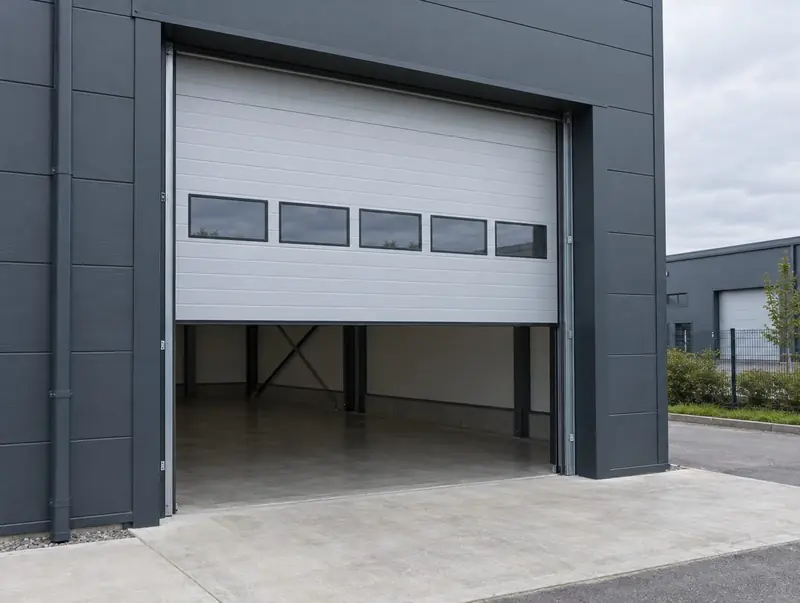
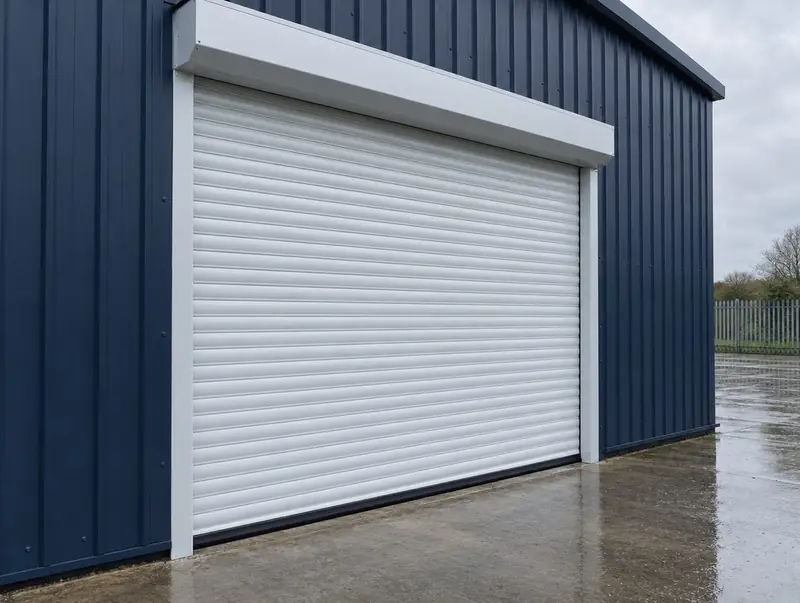
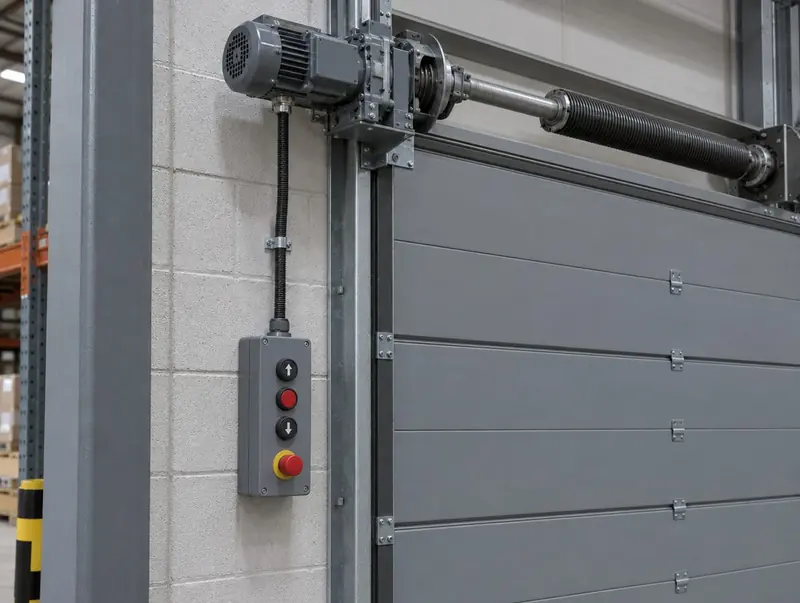
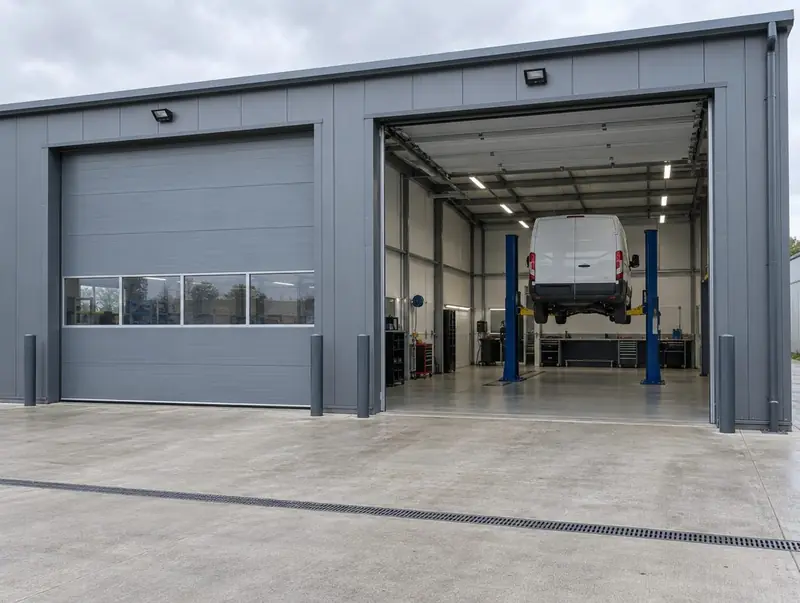
Insulated sectional overhead doors suit most heated workshops because they insulate well and can carry vision panels for daylight, provided there is headroom for the tracks. Insulated roller doors suit bays where vehicle lifts or overhead services leave no room for sectional tracks, since the curtain coils into a compact barrel above the opening.
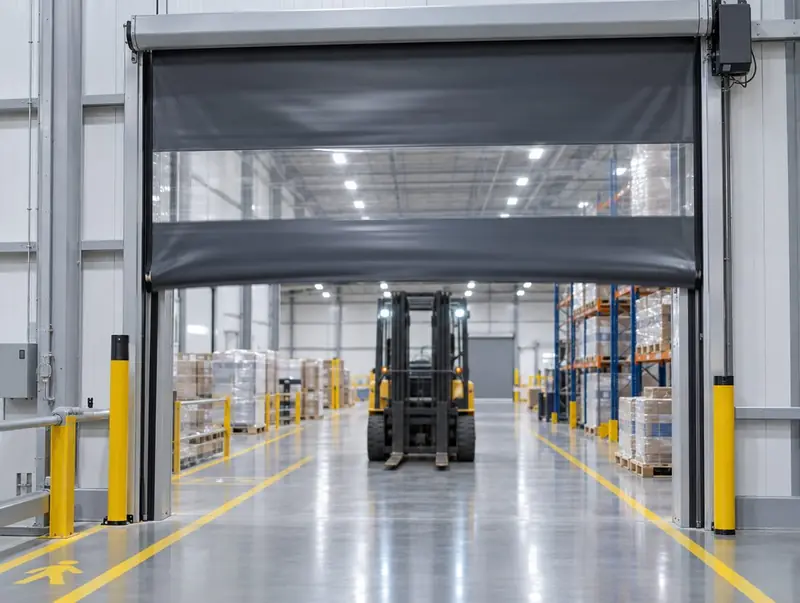
- Busy bays: high-speed doors cut open time where vehicles move in and out all day.
- Controls: automation with remote or radar activation, and timed closing where it suits your workflow.
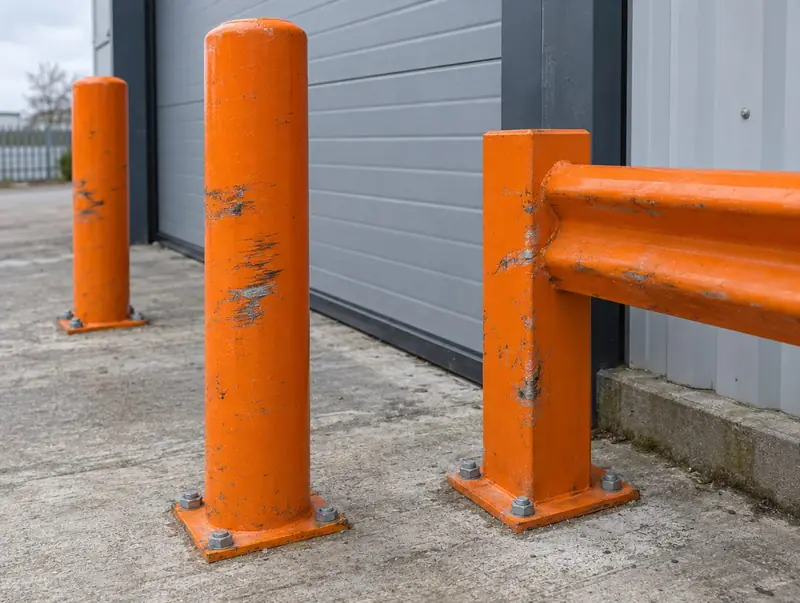
- Protection: bollards and guide-rail guards at each door line.
- Wash bays: galvanised or stainless components and sealed controls.
High-lift or vertical-lift tracks give sectional doors more clearance where lifts sit close to the opening. Vision panels let technicians see vehicles approaching the door and bring daylight into the bay.
What safety points apply to powered workshop doors?
Powered workshop doors must have features that prevent trapping and must be maintained in efficient working order (Workplace Regulations 1992 in England, Wales and Scotland; the 1993 Northern Ireland regulations there). In practice that means a monitored safety edge, photocells or a light curtain on doors that close automatically, plus regular checks of closing force.
- Keep the closing line clear of inspection pits and lifts.
- Fit a separate pedestrian door so staff are not walking under vehicle doors.
- Make sure each door has a manual override for power cuts.
- Review older doors without safety edges for a safety upgrade.
If a manual door is converted to electric, the installer usually becomes the manufacturer under the Supply of Machinery (Safety) Regulations 2008 and must issue a Declaration of Conformity. Where we carry out the conversion, we take on that duty.
How do you fit workshop doors without closing the workshop?
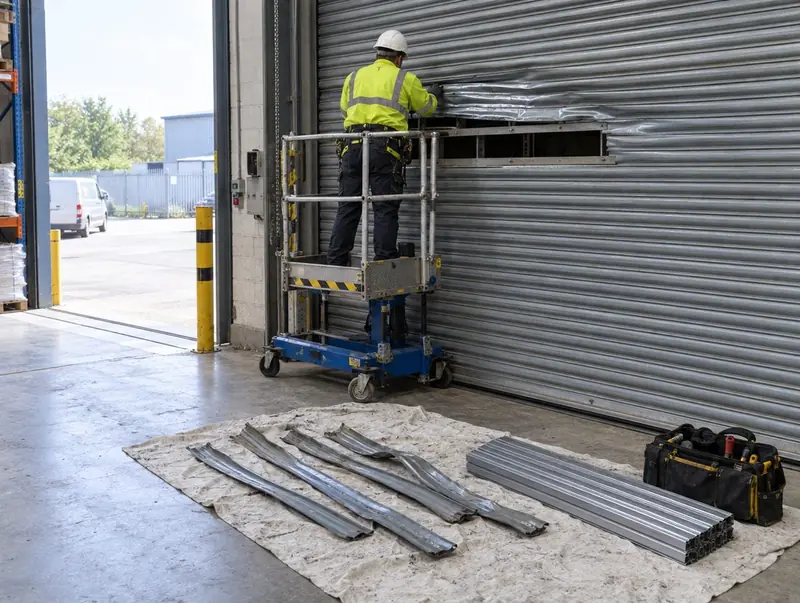
Workshop doors are usually replaced one bay at a time, so the rest of the workshop stays open. A single door replacement is often completed in a day or two once the new door is on site, and we agree which bays are out of use with your workshop manager at survey.
- Book weekend or evening fitting to avoid losing productive hours.
- Move vehicles and equipment clear of the work area beforehand.
- Isolate lifts or cranes near the door line during works where needed.
- Secure the opening overnight if a job spans two days.
Where a new motor needs a three-phase supply that is not already at the door, your electrician can usually run it to an isolator before we arrive. The written quote states the supply each motor needs, so that work can be priced and booked early.
Survey checklist for vehicle workshops
- Opening widths and heights for your largest vehicles
- Headroom above each door and the position of lifts
- Inspection pits near the door line
- Workshop heating and target temperatures
- Wash bays or other corrosive conditions
- Existing power supply at each door
- Which bays can be out of use, and when
Questions from vehicle workshops
Will a sectional door clash with our vehicle lift?
It can if the lift sits under the door tracks when raised. We measure lift positions and raised heights at survey, then choose a track type that clears them, such as high-lift or vertical-lift tracks, or recommend an insulated roller door that coils above the opening instead. The written quote shows the clearances we have allowed for.
What does an insulated workshop door cost?
Guide prices for an electric 40 mm insulated sectional door up to about 4 by 4.5 metres are £3,495 to £8,495, and for an insulated electric roller door up to about 4 by 4 metres £3,195 to £7,495, supplied and installed. Prices are guides, ex VAT, and are confirmed in writing after survey.
Can you add a pedestrian door to a vehicle door?
Often, yes. A wicket door can be built into some sectional and sliding doors, with a switch that stops the main door moving while it is open, but it adds a raised threshold that can be a trip hazard. A separate steel personnel door beside the vehicle door is usually simpler and safer. We advise which suits your opening at survey.
Last updated 19 October 2026.